Mitel 5330e IP Phone – Refurbished
January 20, 2026
The IT Manager’s Telecom Documentation System
September 8, 2026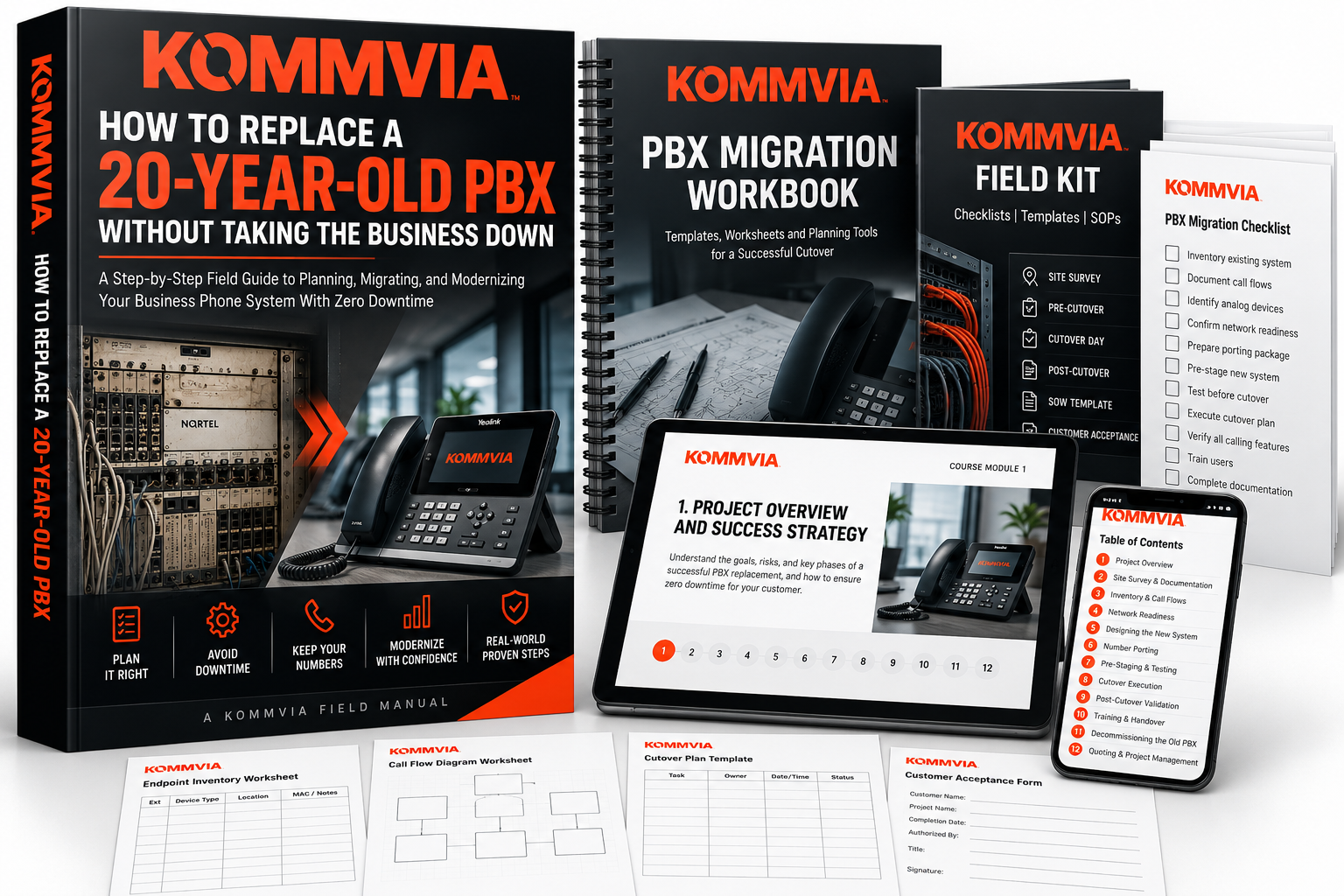
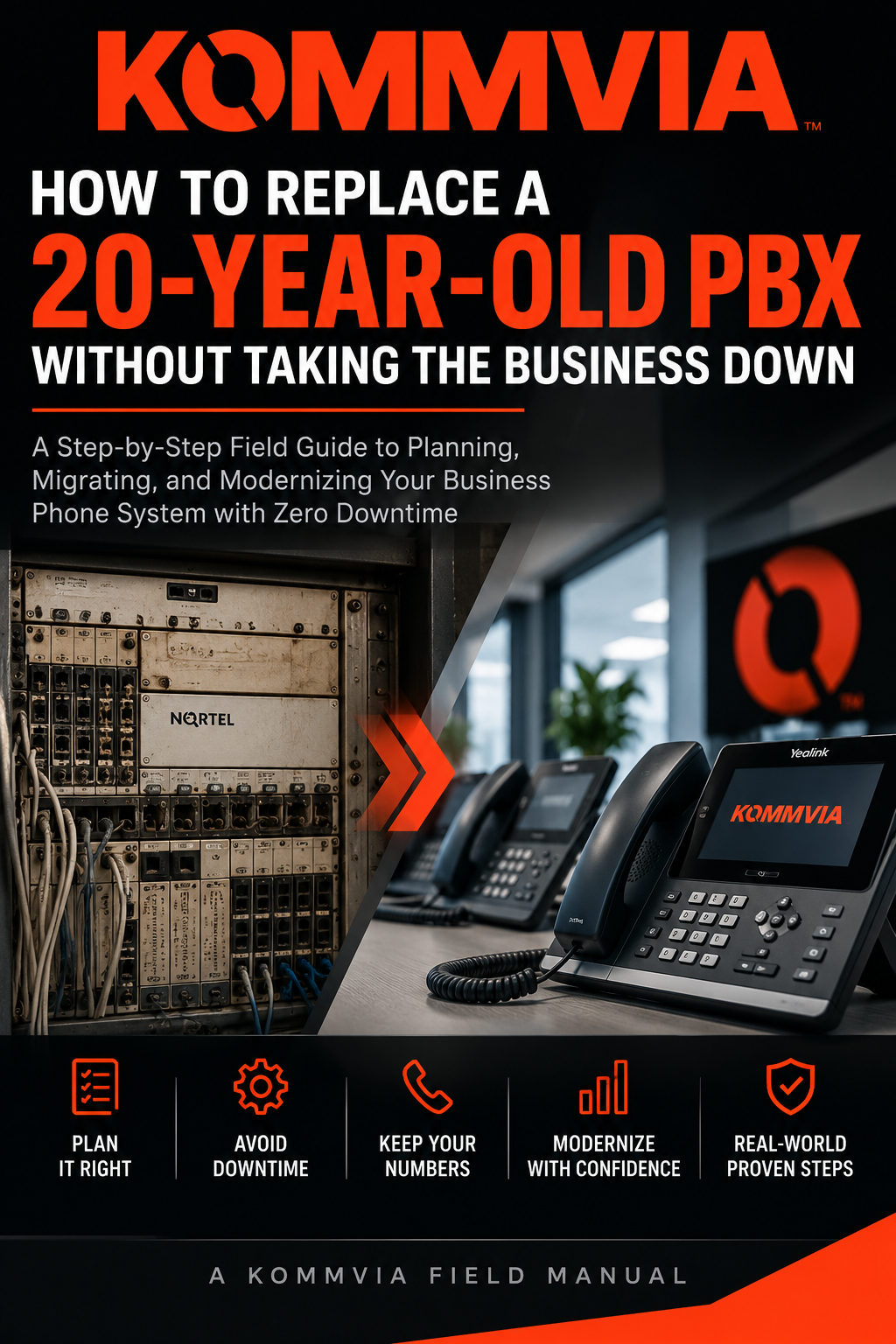
How to Replace a 20-Year-Old PBX Without Taking the Business Down
A Step-by-Step Field Guide to Planning, Migrating, and Modernizing a Business Phone System With Zero Downtime
Replace an aging PBX without turning cutover day into chaos.
This practical KOMMVIA field course walks you through the entire legacy PBX replacement process—from the first site survey to number porting, pre-staging, cutover, rollback planning, testing, training, and final documentation.
Built around real-world telecom workflows, the package includes the complete written course, migration workbook, field checklists, templates, and cutover tools you can actually use on a customer project.
No fluff. No video course to sit through. Just a practical system you can read, print, and take into the field.
Original price was: $6.97.$3.00Current price is: $3.00.
OLD PBX. NEW SYSTEM. NO CHAOS.
Replacing a 20-year-old phone system sounds straightforward:
Install the new phones. Port the numbers. Disconnect the old PBX.
Except anyone who has worked around legacy telecom knows it’s rarely that simple.
Behind that old cabinet may be years of undocumented programming, proprietary digital stations, analog devices, paging systems, fax machines, door phones, carrier circuits, hunt groups, voicemail boxes, forgotten DIDs, cross-connects, and business processes nobody remembers until they stop working.
How to Replace a 20-Year-Old PBX Without Taking the Business Down gives you a structured method for approaching the entire migration.
This isn’t a generic overview of VoIP.
It’s a field-focused migration system designed around one objective:
Build and test the new environment before you destroy the old one.
WHAT YOU’LL LEARN
You’ll work through the migration from beginning to end, including:
- Surveying and documenting an existing legacy PBX
- Inventorying extensions, DIDs, trunks, phones and specialty devices
- Finding the things customers forget to mention
- Mapping existing call flows before changing them
- Evaluating the network for VoIP
- Planning PoE, switching, VLANs, WAN connectivity and resiliency
- Handling fax, paging, door phones and other analog dependencies
- Planning emergency calling and location requirements
- Building a clean number-porting package
- Preventing common porting disasters
- Pre-staging the new phone system
- Establishing proper customer account ownership and administrative access
- Provisioning and labeling endpoints
- Building auto attendants, hunt groups, queues and schedules
- Creating a cutover matrix
- Running the actual migration
- Testing inbound and outbound calling
- Validating caller ID, transfers, voicemail and routing
- Establishing objective rollback criteria
- Training receptionists, users and administrators
- Stabilizing the system after migration
- Creating professional closeout documentation
- Decommissioning the old PBX responsibly
- Structuring and quoting the migration as a professional project
YOU’RE GETTING MORE THAN A BOOK
The complete package includes:
1. KOMMVIA PBX Replacement Field Course
The complete written system covering discovery through final closeout.
2. PBX Migration Workbook
Working sheets for:
- Customer discovery
- Endpoint inventory
- Telephone-number inventory
- Analog and specialty devices
- Network readiness
- Call-flow design
- Porting information
- Cutover planning
- Rollback planning
- Acceptance testing
- Training
- Closeout
- Capstone migration planning
3. PBX Replacement Field Kit
Print-and-use resources including:
- Pre-site checklist
- Site-survey checklist
- 48-hour pre-cutover checklist
- Cutover-day command checklist
- Post-cutover checklist
- Customer discovery interview
- Scope-of-work framework
- Cutover status template
- Customer acceptance record
BUILT FOR PEOPLE WHO ACTUALLY HAVE TO MAKE IT WORK
This course is ideal for:
Telecom technicians • VoIP installers • Structured cabling contractors • MSPs • IT service companies • Low-voltage contractors • New telecom business owners • Sales engineers • Project managers • Technical sales professionals
Whether you’re replacing a small office key system or planning a larger legacy PBX migration, the principles are the same:
Know what’s there. Know what it does. Build the replacement. Test before moving traffic. Control the cutover. Have a rollback plan. Document everything.
NO HOURS OF VIDEO REQUIRED.
There’s no 14-hour video library to work through before you get something useful.
The KOMMVIA system is deliberately written, printable and field-friendly.
Open it.
Find what you need.
Print the worksheet.
Take it to the site.
Use it.
THE KOMMVIA FIELD RULE
Document first. Disconnect second.
Because the best PBX migration isn’t the one with the fanciest phones.
It’s the one where Monday morning arrives and the customer’s business simply keeps working.
KOMMVIA™ — Practical Telecom Field Education
Related products
-
Meridian M7310 Phone
Original price was: $65.00.$49.97Current price is: $49.97. -
The Telecom Cost Reduction Playbook
Original price was: $6.97.$3.00Current price is: $3.00.