The Business VoIP Migration Readiness Playbook
September 8, 2026
The MDF & IDF Cleanup Playbook
September 8, 2026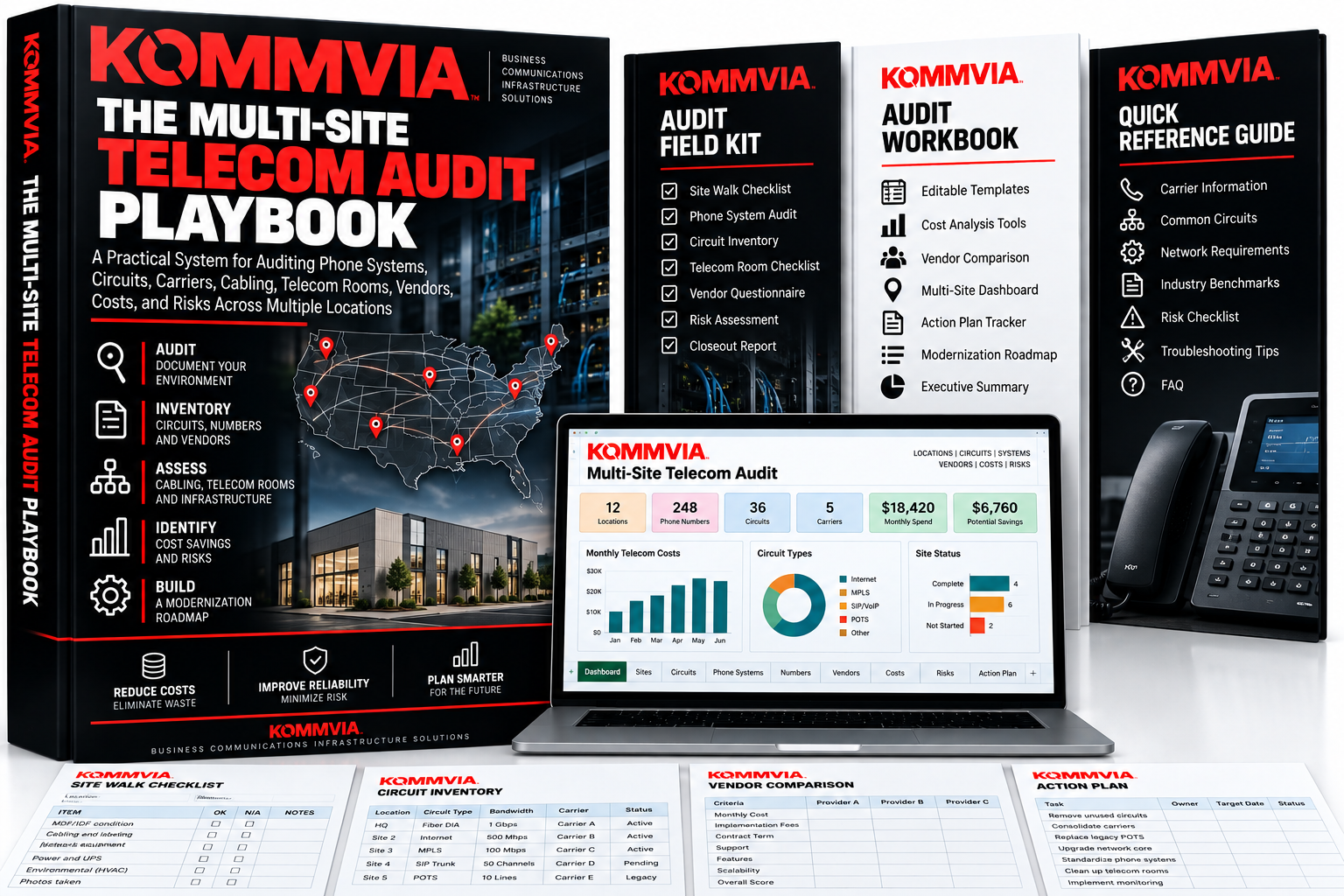
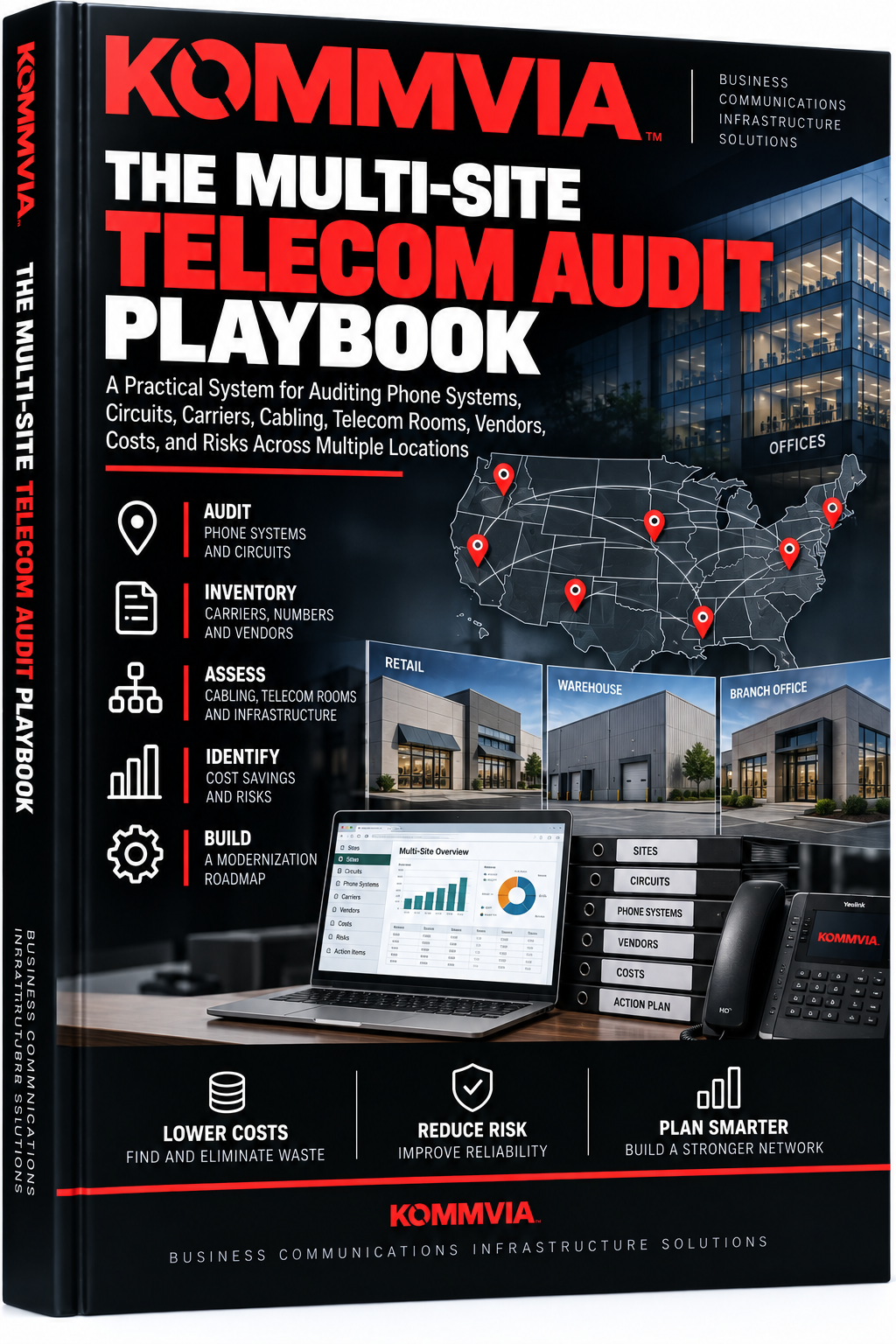
The Multi-Site Telecom Audit Playbook
A Practical System for Auditing Phone Systems, Circuits, Carriers, Cabling, Telecom Rooms, Vendors, Costs, and Risks Across Multiple Locations
Managing telecom across multiple locations can quickly become a mess of different carriers, phone systems, circuits, contracts, vendors, and undocumented infrastructure.
The Kommvia Multi-Site Telecom Audit Playbook gives IT teams a practical system for auditing and organizing the entire environment—from phone systems and carrier services to MDF/IDF rooms, analog devices, costs, risks, and modernization opportunities.
Includes the complete playbook, field audit kit, checklists, and interactive Multi-Site Telecom Audit Master Workbook.
One organization. Every site. One source of truth.
Original price was: $6.97.$3.00Current price is: $3.00.
Do You Actually Know What’s Running at Every Location?
One office has hosted VoIP.
Another still has an old PBX.
A warehouse has analog lines nobody recognizes.
One location has redundant internet. Another has no backup connection at all.
Carrier bills are going to different departments. Contracts renew at different times. Telecom rooms haven’t been documented in years. Nobody is quite sure which vendor supports what.
Multiply that across 5, 10, 50, or 100 locations and telecom becomes difficult to control.
The Kommvia Multi-Site Telecom Audit Playbook gives IT teams a repeatable system for bringing the entire environment into view.
BUILD YOUR MASTER SITE INVENTORY
Start by creating one authoritative list of every location.
Document:
- Site and address
- Business function
- Business hours
- Local contacts
- IT and facilities ownership
- User counts
- Phone counts
- MDFs and IDFs
- Primary providers
- Critical communications requirements
Instead of treating every location as its own island, manage them as one communications environment.
AUDIT YOUR CARRIERS & CIRCUITS
Connect recurring telecom expenses to actual services.
Inventory:
Internet & DIA • Broadband • SIP • PRI • POTS/Analog • Toll-Free • SD-WAN • MPLS/WAN • UCaaS • Managed Network Services
Track carrier, account information, circuit IDs, location, purpose, monthly cost, contract dates, renewal ownership and disposition.
Every recurring service should answer five questions:
Where is it? Who owns it? What does it do? What does it cost? Do we still need it?
DOCUMENT EVERY PHONE ENVIRONMENT
Capture the communications platform operating at each location.
Document:
- PBX or VoIP platform
- Provider
- Main numbers
- DIDs
- Users and extensions
- Auto attendants
- Queues and ring groups
- Voicemail
- After-hours routing
- Emergency calling administration
- Support ownership
Now IT can see which locations are standardized—and which ones aren’t.
FIND ANALOG & SPECIALTY SERVICES
Legacy services have a habit of surviving long after everyone has forgotten about them.
Identify analog and specialty communications supporting:
Elevators • Fire Alarms • Security • Fax • Paging • Door Phones • Emergency Phones • Modems • Telemetry • Specialty Equipment
Document the responsible vendor, current transport, criticality and future disposition.
WALK THE MDFs & IDFs
Invoices tell you what you’re paying for.
Telecom rooms show you what’s actually there.
Use the included audit process to document:
Carrier demarcations • Racks • Cabinets • Patch panels • Switches • Gateways • UPS systems • Power • Labeling • Cable management • Access • Environment • Documentation
Capture problems before they become emergency projects.
UNDERSTAND YOUR VENDORS
Who do you call when something fails?
Create a centralized vendor and escalation matrix covering carriers, VoIP providers, cabling contractors, network vendors, specialty vendors and other communications partners.
Document internal ownership, support contacts, escalation procedures, contract ownership and after-hours support.
SEE WHAT TELECOM ACTUALLY COSTS
Bring recurring expenses together across the organization.
The included workbook helps identify:
- Duplicate services
- Unknown services
- Unnecessary legacy lines
- Out-of-contract services
- Pricing inconsistencies
- Consolidation opportunities
- Potential savings
And track projected savings from identification through actual implementation.
IDENTIFY RISK
Not every telecom problem is equally important.
Separate cosmetic cleanup from genuine business-continuity exposure.
Track risks including:
Unsupported hardware • No backup connectivity • Unknown carrier services • Critical analog dependencies • Poor telecom-room conditions • Contract exposure • Undocumented infrastructure • Single-person knowledge dependencies
Assign ownership and prioritize corrective action.
BUILD YOUR MODERNIZATION ROADMAP
The audit shouldn’t end with a spreadsheet nobody opens again.
Turn your findings into an actionable roadmap:
Immediate Corrections → 90-Day Cleanup → Contract Actions → POTS Elimination → VoIP Modernization → Network Improvements → Cabling Remediation → MDF/IDF Cleanup → Long-Term Standardization
Now management can see not only what’s wrong, but what should happen next.
What’s Included
The Multi-Site Telecom Audit Playbook
The complete step-by-step system for auditing and managing telecom across multiple business locations.
Multi-Site Telecom Audit Field Kit
Print-ready site walkthrough, carrier review, telecom-room, risk and audit-closeout checklists.
Multi-Site Telecom Audit Master Workbook
An interactive Excel system covering:
Dashboard • Sites • Carrier Services • Phone Systems • Numbers • Analog & Specialty • Telecom Rooms • Vendors • Risks • Savings Opportunities • Modernization Roadmap
Track current monthly telecom costs, open risks, unknown services, projected savings and modernization initiatives from one place.
Built for Organizations With Multiple Locations
Ideal for:
IT Managers • IT Directors • Network Teams • Systems Administrators • Facilities Teams • Telecom Managers • Multi-Site Businesses • MSPs • Operations Teams
Whether you’re responsible for five branch offices or a nationwide portfolio of facilities, the system gives you a repeatable way to understand what exists at every location.
Audit It. Organize It. Improve It.
Know your sites.
Know your systems.
Know your carriers.
Know your costs.
Know your risks.
Then build the roadmap forward.
Related products
-
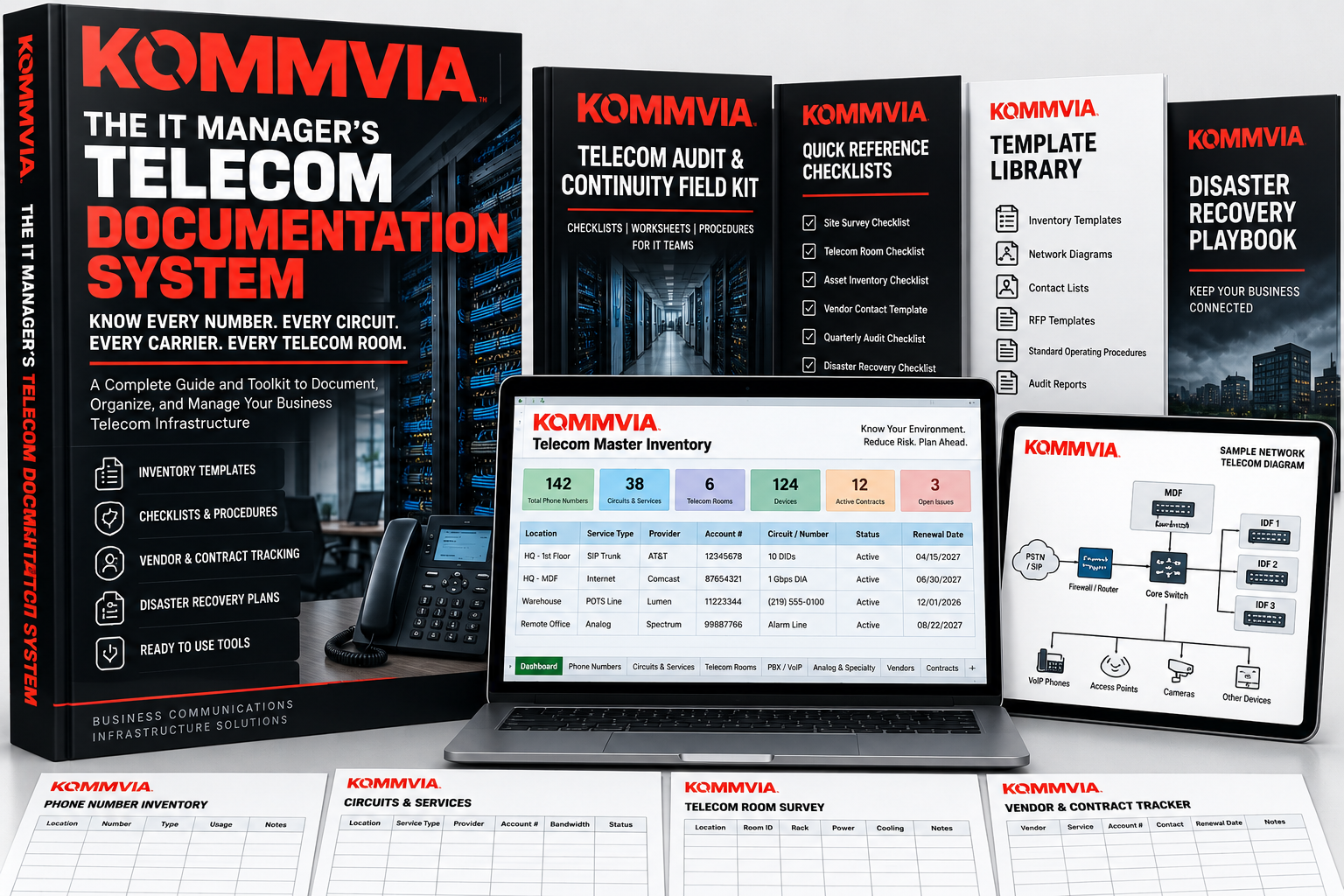
The IT Manager’s Telecom Documentation System
Original price was: $6.97.$3.00Current price is: $3.00. -
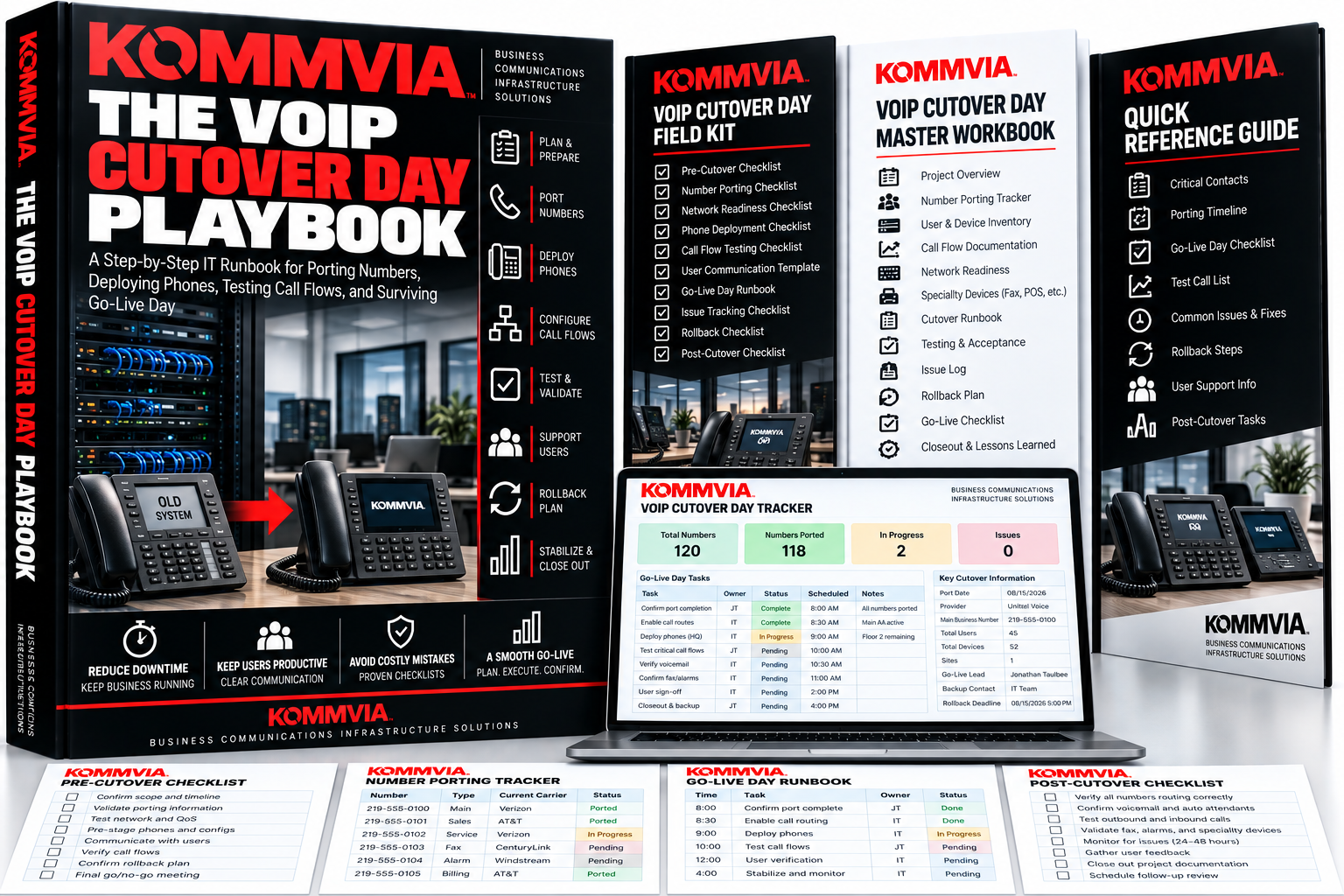
The VoIP Cutover Day Playbook
Original price was: $6.97.$3.00Current price is: $3.00. -
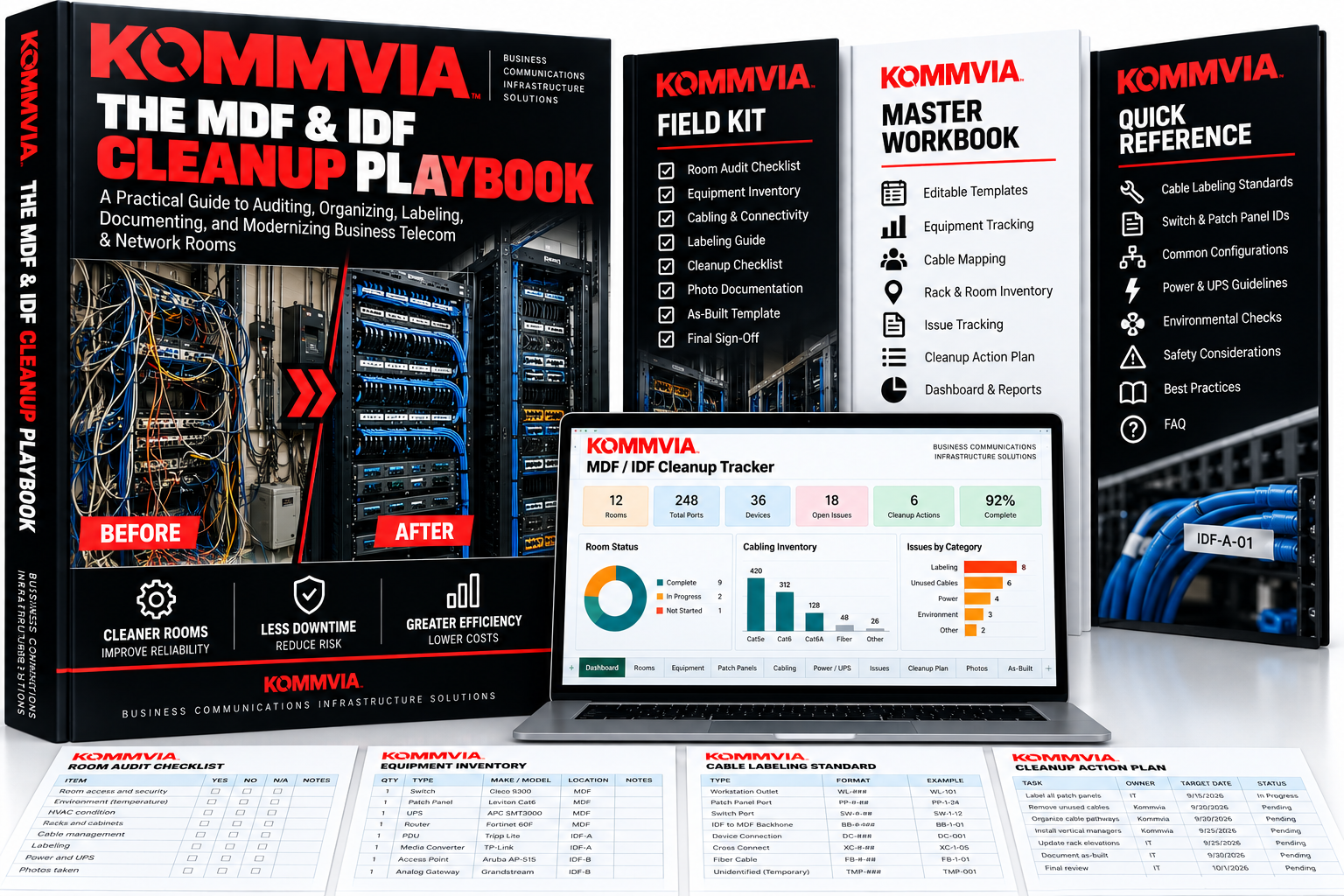
The MDF & IDF Cleanup Playbook
Original price was: $6.97.$3.00Current price is: $3.00.