How Much Does Structured Cabling Cost? A Field Guide for Indiana & Chicago Businesses
September 28, 2026
A Carrier Says “It’s Your Equipment.” The Phone Vendor Says “It’s the Carrier.” Now What?
September 29, 2026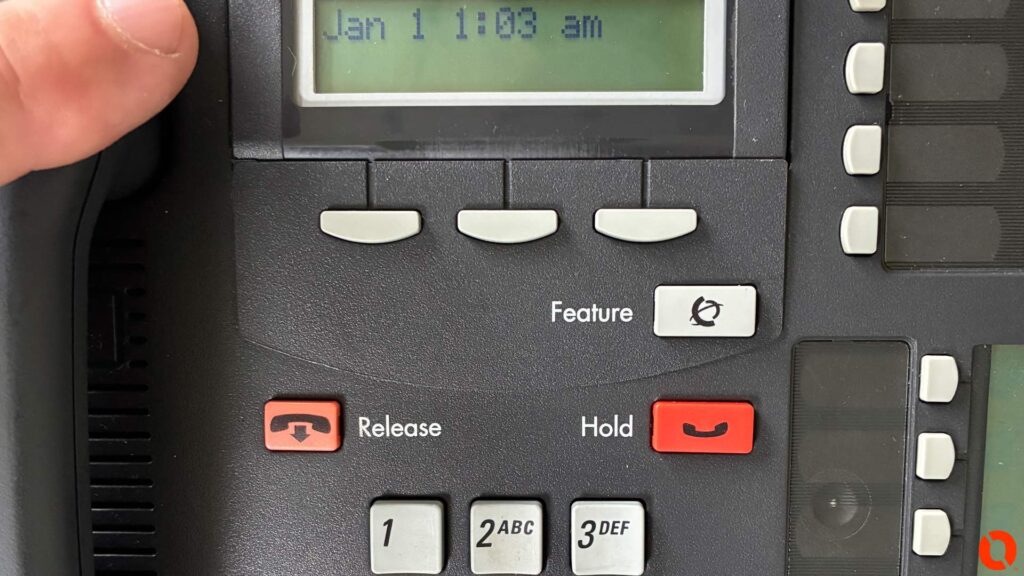
If you’re trying to figure out what it costs to replace a business phone system, you’ve probably already noticed that getting a straight answer isn’t easy.
You’ll find companies advertising VoIP phones for $20 or $30 per user per month. You’ll find inexpensive systems online that look like you can plug them in yourself. Then you’ll get a quote from a telecom contractor for several thousand dollars and wonder where the difference comes from.
The reason is pretty simple: replacing a business phone system is rarely just about replacing the phones.
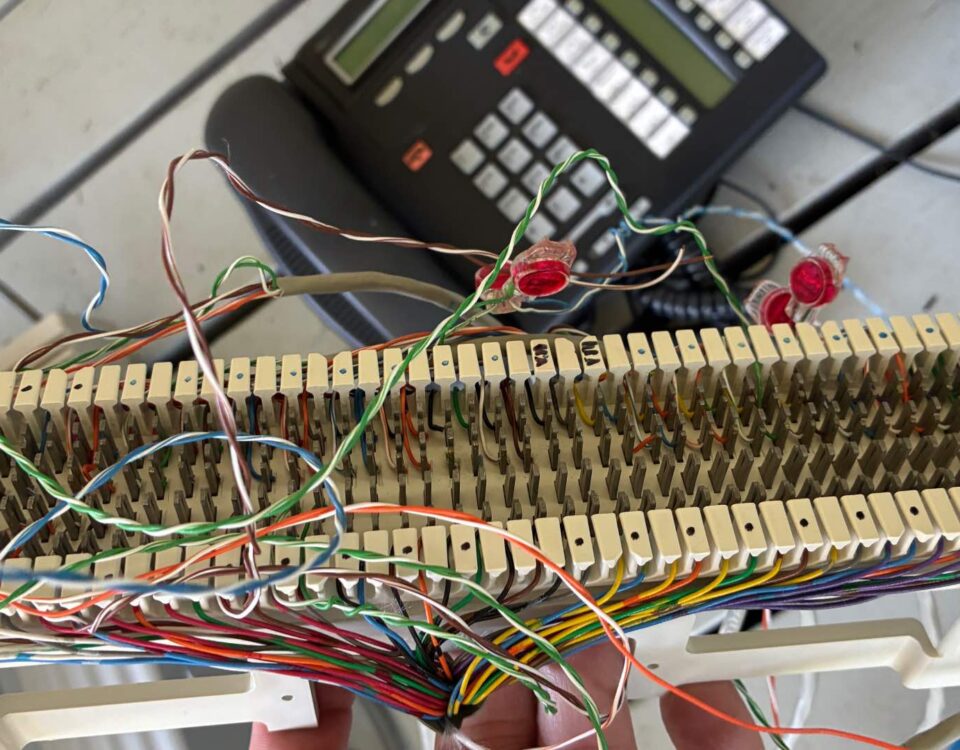
I’ve worked around business phone systems and telecom infrastructure for years, and when I walk into a building with an older Nortel, Avaya, NEC, Panasonic, Toshiba, ShoreTel, Mitel, Vertical or similar system, the phones sitting on the desks are only one part of what I’m looking at.
I’m looking at how calls get into the building, what the existing cabling looks like, whether there’s paging tied into the system, how voicemail works, what numbers need to be ported, whether there are analog devices hiding somewhere, what the network looks like, and what absolutely cannot stop working when we make the change.
That’s what determines what a phone system replacement really costs.
So, What Does a Business Phone System Replacement Cost?
For a small to midsize business, a professionally installed phone system replacement can commonly land anywhere from roughly $3,000 to $25,000 or more.
That’s intentionally a wide range.
A small office with five phones, good network infrastructure and a straightforward setup is a completely different project from a manufacturer with 50 extensions, overhead paging, multiple buildings, analog devices and an old PBX that’s been modified for 20 years.
As a rough planning range, I would think about projects like this:
| Business Size | Rough Project Range |
|---|---|
| 5–10 phones | $3,000–$7,500 |
| 10–25 phones | $5,000–$12,000 |
| 25–50 phones | $10,000–$20,000 |
| 50+ phones | $15,000–$30,000+ |
Those aren’t quotes. They’re useful budgeting ranges.
I’ve seen relatively small systems become complicated projects, and I’ve seen larger systems that were surprisingly straightforward. The building and existing infrastructure matter just as much as the number of phones.
The Phones Aren’t Usually the Expensive Part
This is where a lot of business owners get thrown off.
They look online and see a business IP phone for $100 or $150.
Twenty phones might only represent a few thousand dollars in hardware.
So why can the completed project cost considerably more?
Because somebody still has to make the entire thing work.
A proper replacement can involve documenting the existing system, designing the new call flow, building and configuring the new system, programming users and extensions, configuring auto attendants and voicemail, coordinating number ports, installing phones, modifying cabling, configuring switches, verifying PoE capacity, integrating paging equipment, dealing with analog devices, testing inbound and outbound calling, performing the cutover and training employees.
Then there’s the part that matters most:
Monday morning has to work.
That’s what you’re really paying for.
Here’s What I Look at Before Replacing a Phone System
Before I recommend ripping anything out, I want to understand what is actually there.
How many phones are being used?
Which numbers belong to the business?
How do incoming calls currently route?
Is there an auto attendant?
Does the receptionist answer everything?
Are there hunt groups or ring groups?
Who has voicemail?
Are voicemail messages being emailed?
Is there overhead paging?
Are there door phones?
Conference rooms?
Fax machines?
Alarm panels?
Elevator phones?
Analog cordless phones?
Is the business using copper lines, PRI, SIP trunks or something else?
Then I look at the network.
A modern VoIP phone system depends heavily on the network underneath it. If the switches aren’t appropriate, the cabling is questionable or the internet connection is unreliable, simply putting new IP phones on everyone’s desk doesn’t solve the problem.
Sometimes the phone system project becomes a network project too.
That’s not necessarily bad. It just needs to be discovered before cutover day.
Existing Cabling Can Change the Price Quickly
A business moving from an older digital or analog PBX to IP phones may already have Ethernet at every workstation.
Great.
That can make the project easier.
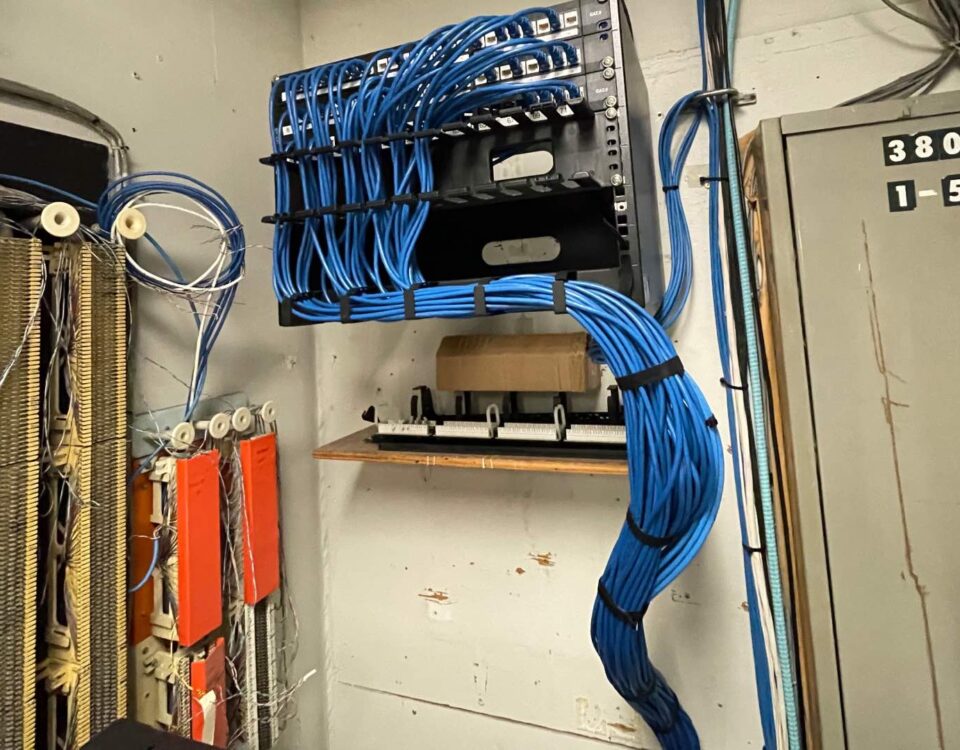
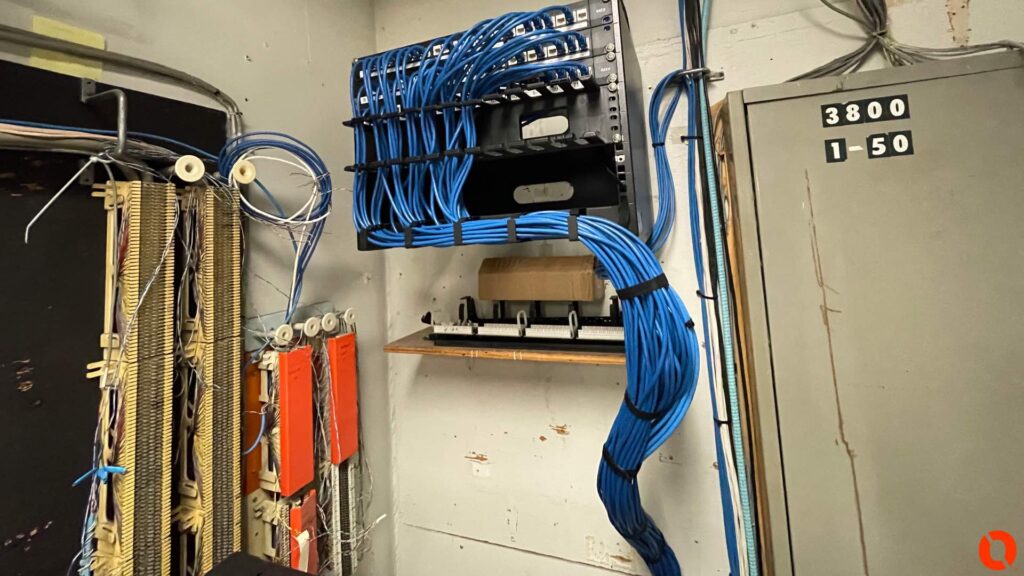
But I’ve also walked into buildings where the phones are running on completely separate voice cabling and there isn’t usable network cabling where the new phones need to go.
Now we’re pulling Cat6.
Maybe we’re adding patch panels.
Maybe the network rack needs work.
Maybe additional switches are required.
Maybe an IDF needs to be cleaned up before adding more equipment.
That’s why quoting a commercial phone replacement based only on the number of phones can be misleading.
The infrastructure matters.
Don’t Forget About the Network Switches
This one catches businesses all the time.
Most modern business IP phones require Power over Ethernet, commonly called PoE.
That means the network switch can provide both network connectivity and power to the phone over the Ethernet cable.
If your existing switches don’t provide adequate PoE, you may need new switches as part of the project.
And I don’t just want to know whether the switch technically supports PoE.
I want to know whether it has enough capacity, whether there are enough available ports, whether the network configuration makes sense and whether we’re putting a brand-new phone system on top of equipment that should have been replaced five years ago.
A phone replacement can expose infrastructure problems that have been sitting quietly in the background.
Number Porting Needs to Be Planned Correctly
Your existing telephone numbers are valuable.
Customers have them.
They’re printed on trucks, signs, business cards and invoices. They’re listed online. Some businesses have had the same main number for decades.
Moving those numbers from the old carrier to the new service provider is called porting.
This needs to be handled carefully.
I generally want the new system built and tested as much as possible before the primary numbers move.
The goal isn’t to tear everything apart and then start figuring out how the new system works.
Build first.
Test.
Prepare.
Then cut over.
That approach reduces surprises considerably.
The Old Phone System May Be Connected to More Than You Think
This is one of my favorite questions to ask:
What else is connected to this thing?
Sometimes nobody knows.
That’s where experience with older systems becomes important.
An old PBX may interact with overhead paging, door entry equipment, analog lines, fax machines, cordless phones, modems, alarm equipment or other devices that haven’t been thought about in years.
You don’t want to discover one of those connections after the old system is sitting in a dumpster.
Before disconnecting legacy equipment, I want to understand what depends on it.
Paging Can Be a Big Deal
This is especially important in manufacturing plants, warehouses, schools, dealerships and larger commercial buildings.
The phone system may be integrated with an overhead paging amplifier.
Employees dial an extension, hear a tone and make an announcement throughout the facility.
Replace the PBX without accounting for that and suddenly the phones work beautifully while nobody can page the warehouse.
That’s not a successful installation.
The paging system needs to be identified during the site assessment and incorporated into the migration plan.
What About Monthly VoIP Costs?
There’s another part of the equation businesses need to understand.
A modern cloud-based phone system usually has a recurring service cost.
Depending on the platform, features, provider and configuration, businesses might see pricing ranging from roughly $20 to $50+ per user per month.
Some systems are priced differently, so don’t treat that as universal.
But here’s where I think businesses need to look beyond the advertised per-user price.
Ask what is actually included.
Support?
Number porting?
Auto attendants?
Call queues?
SMS?
Call recording?
Mobile applications?
Hardware?
Installation?
Onsite support?
Training?
Contract length?
Taxes and regulatory fees?
Emergency calling?
A cheap monthly price isn’t cheap if nobody answers when the phones stop working.
Should You Buy or Lease the Phones?
It depends.
Personally, I like customers understanding exactly what they own and exactly what they’re paying for.
Some providers bundle phones into a long-term agreement. That can reduce upfront costs, but make sure you understand what happens if you leave the provider.
Other installations involve purchasing the phones outright and paying separately for service.
Neither model is automatically wrong.
Just know which one you’re buying.
How Long Should a Business Phone System Last?
This has changed considerably.
Traditional PBXs could stay on the wall for 15, 20 or even 25 years.
I’ve worked around plenty of equipment that proves it.
Modern communications systems are different because more of the intelligence lives in software or in the cloud.
That’s generally a good thing.
Features can be updated without replacing an entire cabinet hanging on the wall.
But businesses should still plan for phone hardware, network switches, cabling and other infrastructure to have their own replacement cycles.
I wouldn’t design a system around the idea that nobody will touch it again for the next 25 years.
I’d design it so the business can change without having to start over.
Do You Actually Need to Replace Your Old Phone System?
Not always.
I’m in the business of installing and replacing this equipment, and I’ll still say that.
If your existing phone system works, replacement parts are available, somebody can support it and it still meets the needs of the business, keeping it running can make sense.
I’ve never liked replacing equipment just because it’s old.
But there is another side to that.
If the manufacturer stopped supporting it years ago, replacement parts are getting difficult to find, nobody remembers how it’s programmed, your carrier services are changing and the entire business depends on that system every morning, eventually you’re carrying risk.
The worst time to design a replacement is usually after the system has failed.
That’s why I prefer having the conversation while everything still works.
Repair vs. Replacement
If you have an older phone system that’s having problems, don’t automatically assume you need a new one.
Sometimes a failed power supply is a failed power supply.
Sometimes it’s a bad station card.
Sometimes the carrier has a problem.
Sometimes there’s damaged cabling.
Sometimes somebody changed something on the network.
And sometimes the PBX really is telling you it’s time.
A good technician should be able to separate those situations.
Repairing an existing system for $800 and getting another couple of productive years out of it could be a perfectly reasonable business decision.
Spending $5,000 every year keeping a system alive that nobody wants to support anymore probably isn’t.
What I Would Budget
If you’re planning a replacement for a normal small or midsize commercial operation, I wouldn’t start by asking:
“How cheap can I get VoIP?”
I’d start with:
“What would it cost to replace our entire communications system correctly?”
That gives you a much better conversation.
For a 10- to 25-phone business, having $5,000 to $12,000 in mind as an initial project-planning range isn’t unreasonable.
If substantial cabling, switching, paging integration or other infrastructure work is needed, expect the number to move.
For larger offices, warehouses, manufacturers or multi-building facilities, the project needs to be evaluated onsite.
There are simply too many variables to quote responsibly from a phone count.
Planning a Phone System Replacement in Northern Indiana, Chicago or Southwest Michigan?
This is exactly the kind of work we handle at Kommvia.
We work with businesses throughout Northern Indiana, Northwest Indiana, the Chicago area and Southwest Michigan on business phone systems, legacy PBX service, VoIP migrations, structured cabling, network infrastructure, paging and related telecom work.
If you’re running an older Nortel, Avaya, NEC, Panasonic, Toshiba, ShoreTel, Mitel, Vertical or another legacy system, you don’t need to wait until it dies.
We can look at what you have now, figure out what’s connected to it, identify what can stay, determine what actually needs to change and build a migration plan around your business.
And if keeping the existing system running makes more sense right now, we’ll tell you that too.
Need help planning a business phone system replacement? Contact Kommvia to schedule an onsite assessment. 1-844-KOMMVIA
We also have an estimator tool here: Business Phone System Estimator
The objective is simple:
Know what you’re dealing with before the phones stop ringing.