The VoIP Cutover Day Playbook
September 9, 2026
The Telecom Cost Reduction Playbook
September 9, 2026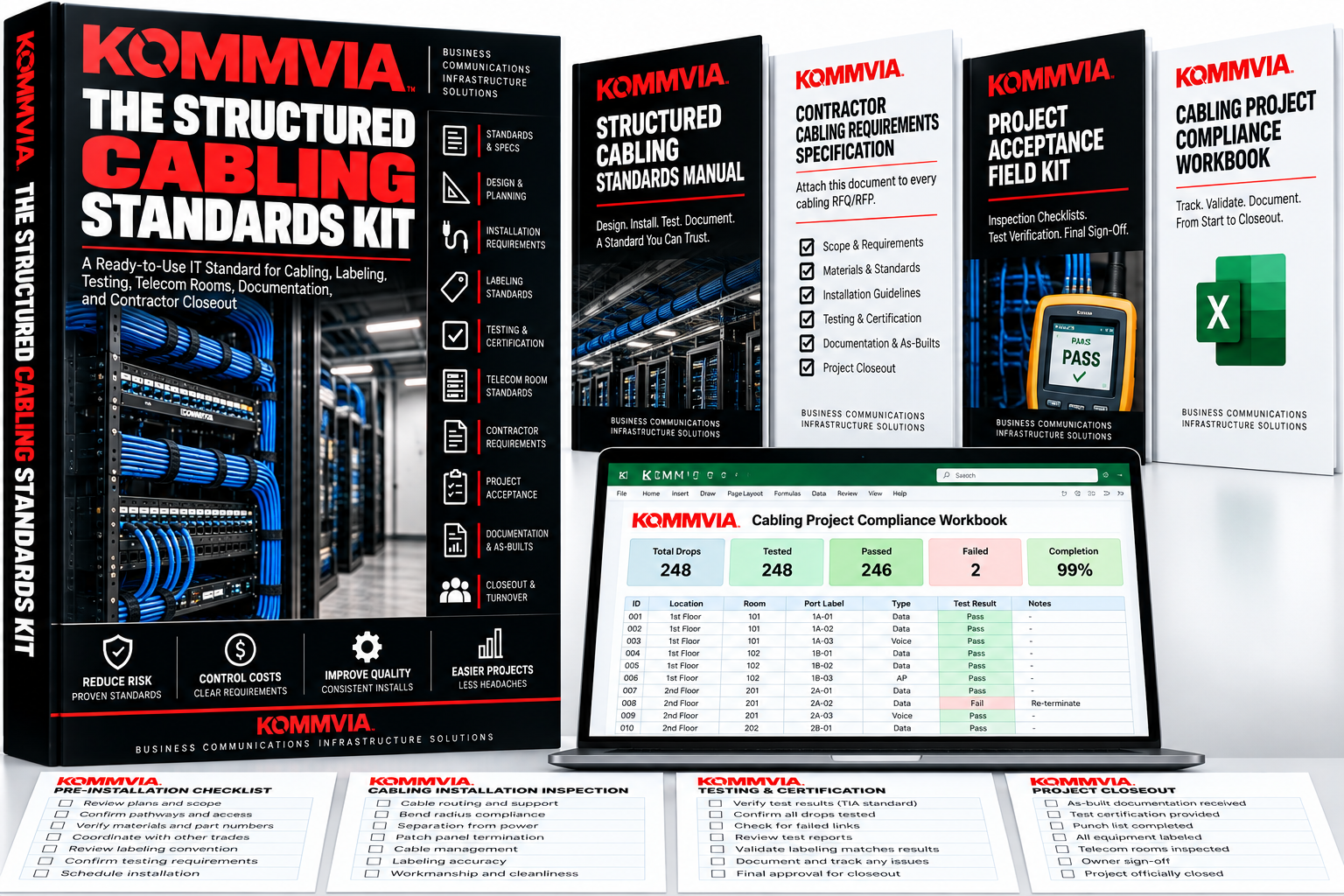

The Structured Cabling Standards Kit
A Ready-to-Use IT Standard for Cabling, Labeling, Testing, Telecom Rooms, Documentation, and Contractor Closeout
Stop letting every cabling contractor build your infrastructure differently.
The Kommvia Structured Cabling Standards Kit gives IT teams a practical, repeatable standard for managing structured cabling projects across every location and every contractor.
Establish clear requirements for cabling, pathways, MDF/IDF rooms, racks, patch panels, labeling, testing and certification, workmanship, documentation, as-builts, change control, and final project acceptance.
Includes the complete Structured Cabling Standards Manual, ready-to-issue Contractor Cabling Requirements Specification, Project Acceptance Field Kit, and interactive Cabling Project Compliance Workbook.
One company. One cabling standard. Every site. Every contractor.
Original price was: $6.97.$3.00Current price is: $3.00.
Stop Letting Every Contractor Build It Differently.
One contractor labels cables one way.
Another uses different materials.
Another leaves behind incomplete test results.
Another finishes the installation without usable as-builts.
Six months later, your IT team inherits the mess.
The Kommvia Structured Cabling Standards Kit gives IT departments a practical system for establishing exactly how communications cabling should be installed, identified, tested, documented, inspected, and turned over.
Instead of relying on each contractor’s preferred methods, establish your standard before the project begins.
CREATE ONE CABLING STANDARD
Establish repeatable requirements for:
Cable & Connectivity • Pathways • Supports • MDF/IDF Rooms • Racks • Patch Panels • Outlets • Labeling • Patch Cords • Testing • Documentation • Closeout
Then use those expectations across projects, contractors, and locations.
STANDARDIZE LABELING
Every permanent link should be identifiable without guessing.
Create consistent conventions for:
Site → Telecom Room → Rack → Patch Panel → Port → Work-Area Outlet
Require durable machine-printed labels at both ends and make sure test records use the same identifiers.
SET MDF & IDF EXPECTATIONS
Define what an acceptable telecom room looks like before installation begins.
Address racks and cabinets, patch-panel organization, horizontal and vertical cable management, power and UPS considerations, carrier demarcations, backbone connections, equipment accessibility, and documentation.
CONTROL INSTALLATION QUALITY
Set clear expectations around routing, pathways, supports, bend radius, pulling practices, penetrations, firestopping, cable management, workmanship, and protection of existing infrastructure.
Good cabling should be built to remain serviceable long after the installer leaves.
REQUIRE TESTING & CERTIFICATION
Don’t accept an installation simply because a laptop connects.
Define the required test standard and require appropriate testing of new permanent links.
Failed links should be corrected and retested.
Final electronic test results should match the identifiers installed in the field.
CONTROL CONTRACTOR DEVIATIONS
Field conditions change.
That doesn’t mean undocumented changes should become permanent infrastructure.
Track material substitutions, route changes, added or removed drops, owner-requested changes, exceptions, and other deviations—and make sure the final documentation reflects what was actually installed.
GET REAL AS-BUILTS
Project completion should include more than an invoice.
Require appropriate closeout information such as:
Outlet/Drop Schedules • Rack & Patch-Panel Schedules • As-Built Drawings • Backbone/Uplink Records • Test Results • Approved Deviations • Warranty Information • Punch-List Completion
Your IT team should be able to understand the infrastructure after the contractor leaves.
What’s Included
Structured Cabling Standards Manual
A complete owner-side framework for establishing consistent structured cabling requirements.
Contractor Cabling Requirements Specification
A ready-to-adapt specification that can be attached directly to cabling RFQs and RFPs.
Project Acceptance Field Kit
Print-ready checklists for pre-installation review, installation walkdowns, labeling, racks, testing, certification, documentation, and final closeout.
Cabling Project Compliance Workbook
An interactive project-control system for tracking:
Project Requirements • Drop Schedules • Telecom Rooms • Label Audits • Test Results • Deviations • Issues • Walkdowns • Closeout • Final Acceptance
Built for IT Teams That Own the Infrastructure
Ideal for:
IT Managers • IT Directors • Network Teams • Infrastructure Teams • Facilities Teams • Project Managers • Multi-Site Organizations • MSPs
Don’t Just Install Cable. Establish a Standard.
Specify it.
Install it.
Label it.
Test it.
Document it.
Inspect it.
Accept it.
Then repeat the same standard everywhere.
One company. One cabling standard. Every site. Every contractor.
Kommvia — Business Communications Infrastructure Solutions
Related products
-
The Telecom Disaster Recovery Playbook
Original price was: $6.97.$3.00Current price is: $3.00. -
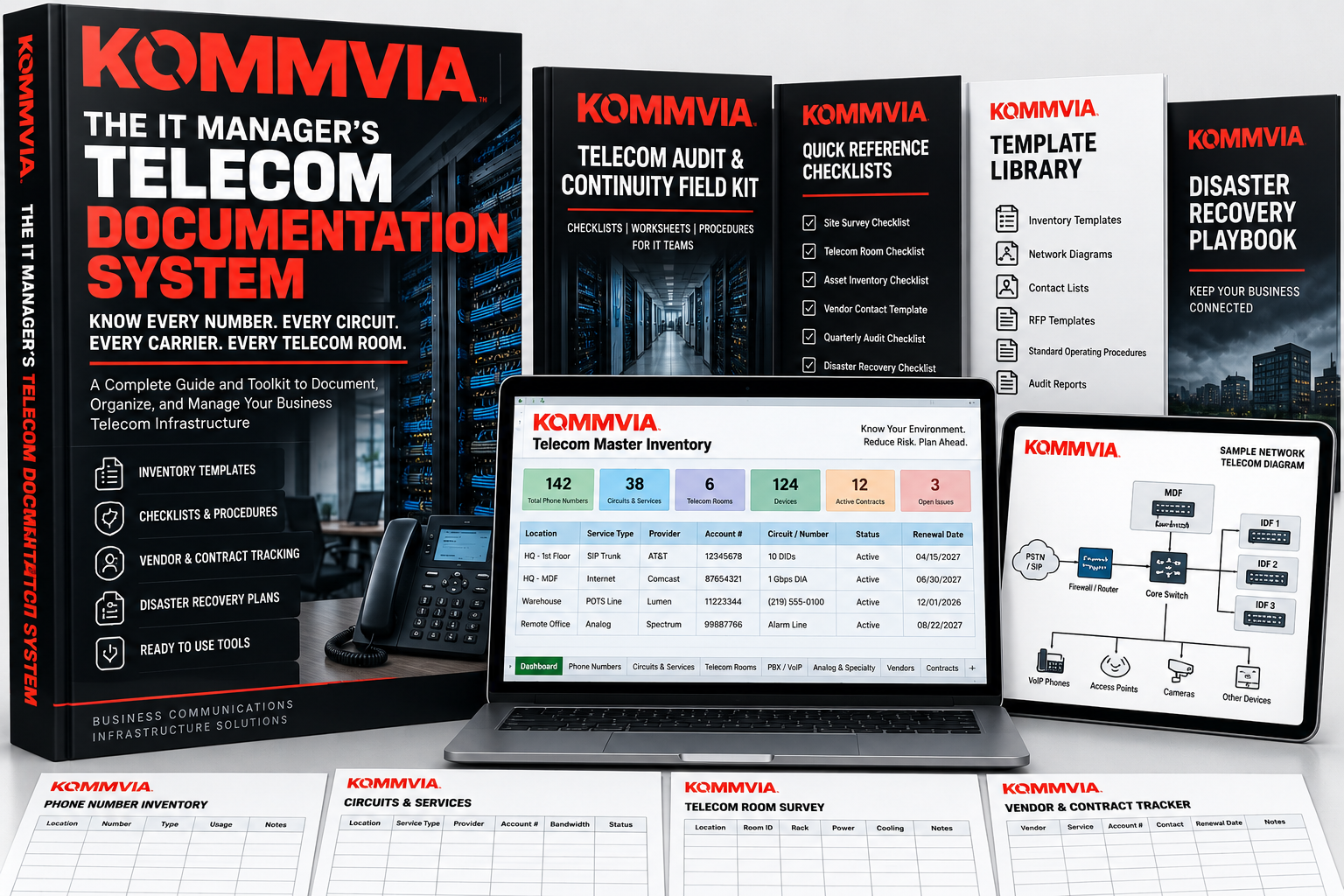
The IT Manager’s Telecom Documentation System
Original price was: $6.97.$3.00Current price is: $3.00. -
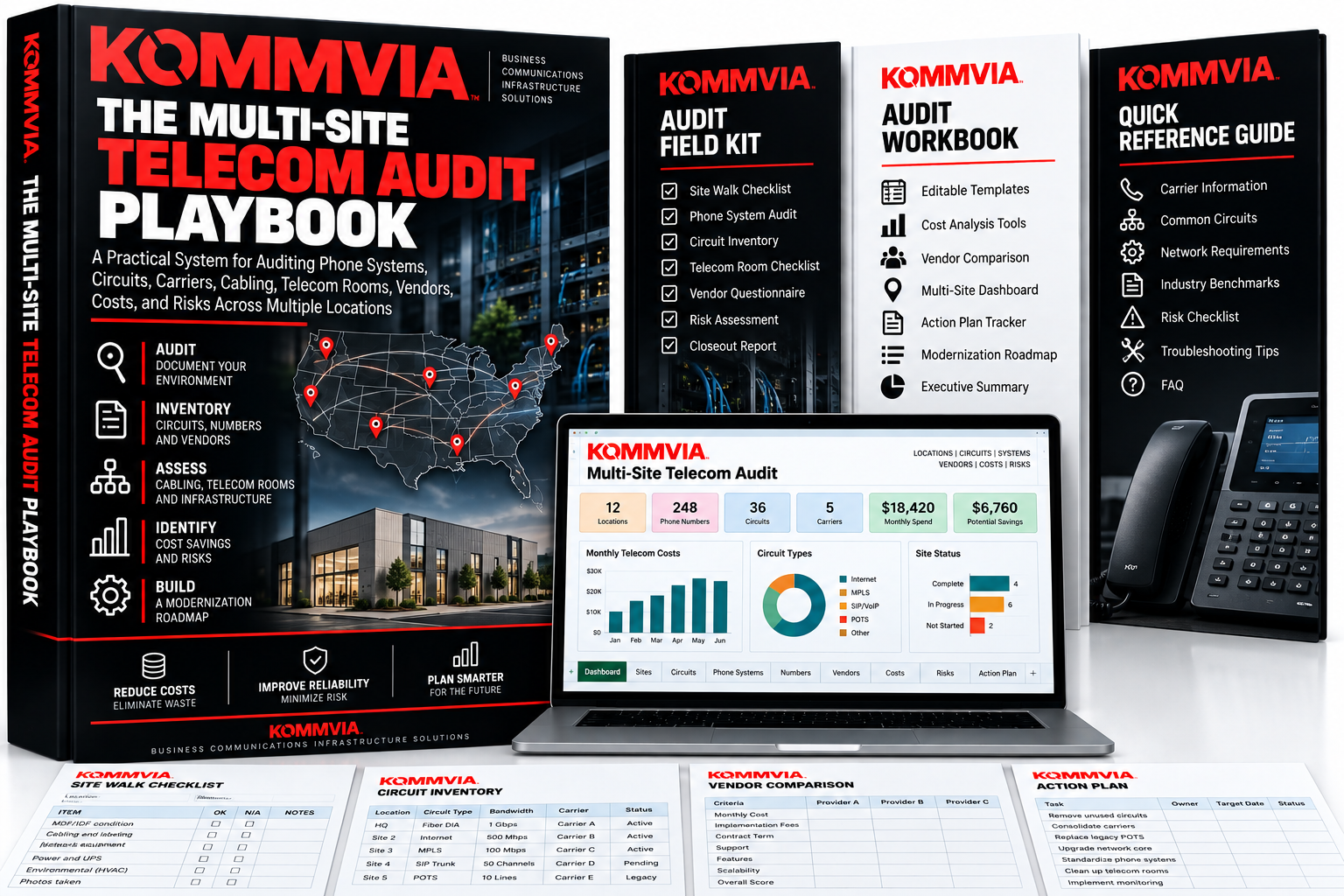
The Multi-Site Telecom Audit Playbook
Original price was: $6.97.$3.00Current price is: $3.00.