Your Wi-Fi Problem Might Not Be a Wi-Fi Problem
August 14, 2026
The $20 Cable That Can Take Down a $20,000 Network
August 15, 2026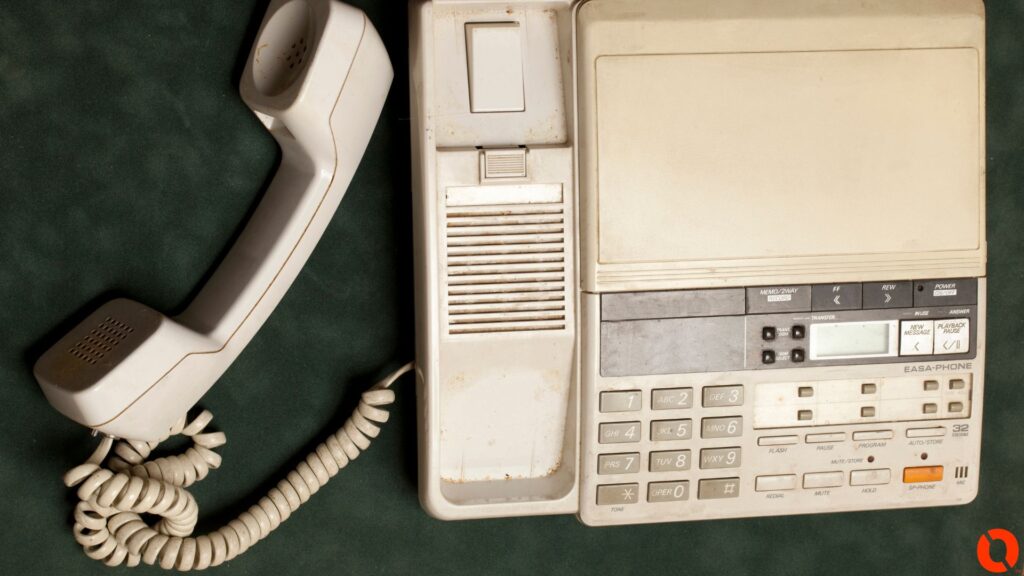
There’s a strange thing about business phone systems. Some of the oldest equipment in a building is often some of the most reliable.
You can walk into a business and find a phone system that was installed 15 or 20 years ago, sometimes even longer, and it’s still handling calls every day. The administration software looks ancient, there might be an extension list taped to the wall, and finding replacement parts isn’t as easy as it used to be. But employees pick up their phones every morning and get a dial tone.
At Kommvia, we have a certain respect for that.
We work with modern VoIP systems, but we don’t believe every Nortel, Avaya, NEC, Mitel, Toshiba, Vertical, or other legacy PBX needs to be removed simply because something newer exists. Sometimes replacing an older system is absolutely the right decision. Other times, the system itself isn’t even the problem.
Before You Replace It, Find Out What’s Wrong
One of the easiest conclusions to reach when an older phone system starts having trouble is that the entire thing needs to go.
Calls start dropping. An extension stops ringing. Audio becomes intermittent. Voicemail quits working correctly. Someone looks at the equipment hanging on the wall and says, “Well, it’s old.”
Then the replacement quotes start coming.
The problem is that business telecommunications involve a lot more than the PBX. A carrier issue can look like a phone-system problem. So can damaged cabling, a bad station port, failing network equipment, a SIP configuration issue, an internet problem, a power issue, or even one bad patch cable.
We’ve always believed it makes more sense to understand the failure before prescribing the solution.
Replacing an entire telephone system without knowing what actually failed is an expensive way to troubleshoot.
That doesn’t mean keeping old equipment alive forever. It means determining whether the system has reached the end of its useful life or whether it simply needs to be repaired.
Some of This Equipment Was Built to Last
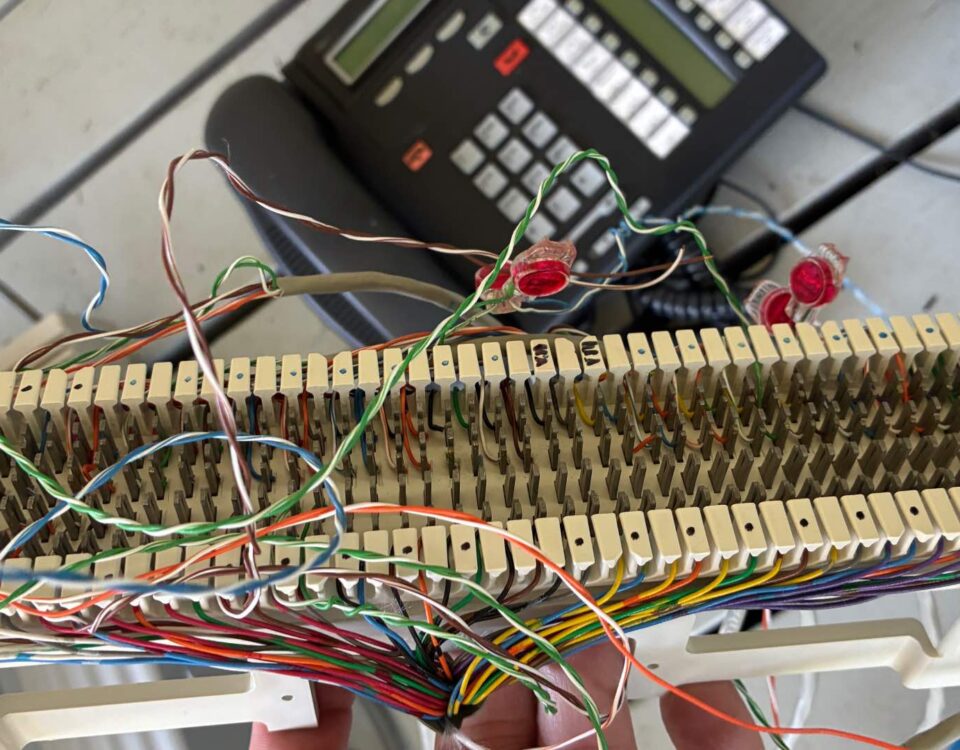
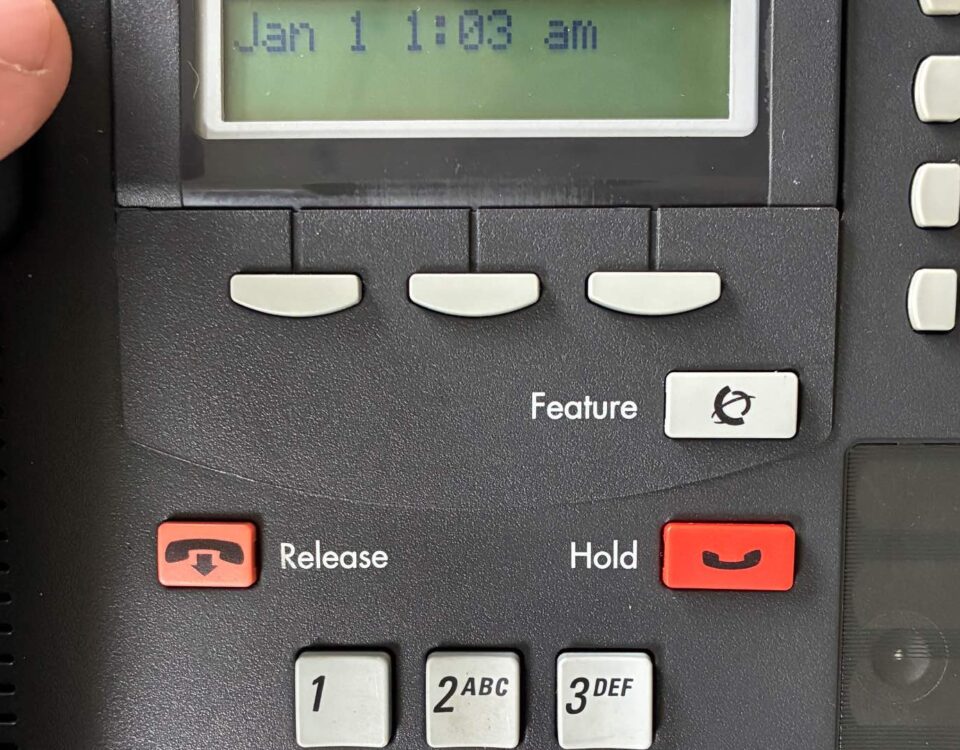
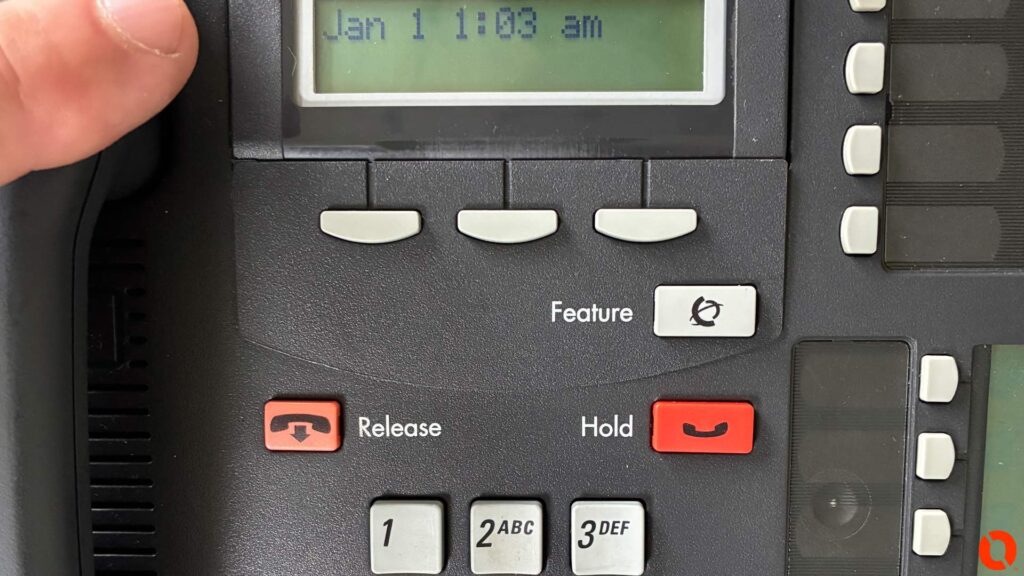
Anyone who has spent enough time inside commercial and industrial facilities has seen old phones that seem almost impossible to kill.
They’ve been mounted in warehouses, maintenance shops, production areas, shipping offices, guard shacks, and mechanical rooms. They’re covered in dust. The labels have worn off the buttons. Some have probably been dropped more times than anyone remembers.
Yet they still work.
A lot of older business telephone equipment was designed around a fairly simple job: process calls reliably every day for years. There were no mobile apps to maintain, monthly software updates to worry about, or dozens of cloud integrations running behind the scenes.
That simplicity had advantages.
Of course, it also has limitations. Replacement hardware becomes scarce. Manufacturer support disappears. Technicians familiar with certain platforms become harder to find. Expansion gets difficult, and businesses eventually need capabilities the original system was never designed to provide.
That’s when modernization starts making sense.
There’s a Better Question Than “How Old Is It?”
Instead of asking how old a phone system is, we think businesses should ask whether it’s still meeting their needs.
A 20-year-old PBX that reliably handles calls for a small office may be doing its job perfectly well. A five-year-old system that can’t support a growing company’s remote employees, multiple locations, call reporting, or mobile workforce might already be holding the business back.
Age is only part of the equation.
Modern VoIP can offer some significant advantages. Employees can answer their business extension from a smartphone or computer. Multiple locations can operate under one system. Voicemail can be delivered to email. Call routing can be changed quickly. Businesses can add users without installing another cabinet on the wall.
For the right company, those aren’t gimmicks. They’re legitimate reasons to upgrade.
The key is that the upgrade should solve a problem.
The Cloud Didn’t Make the Building Disappear
One thing that gets overlooked in conversations about cloud phone systems is how much physical infrastructure is still involved.
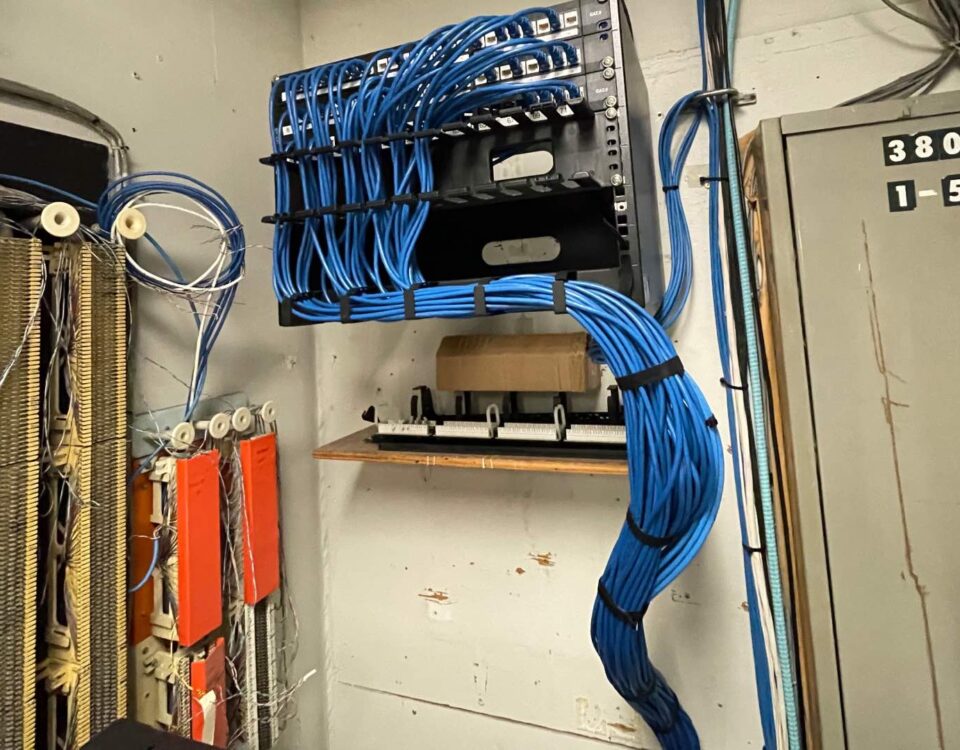
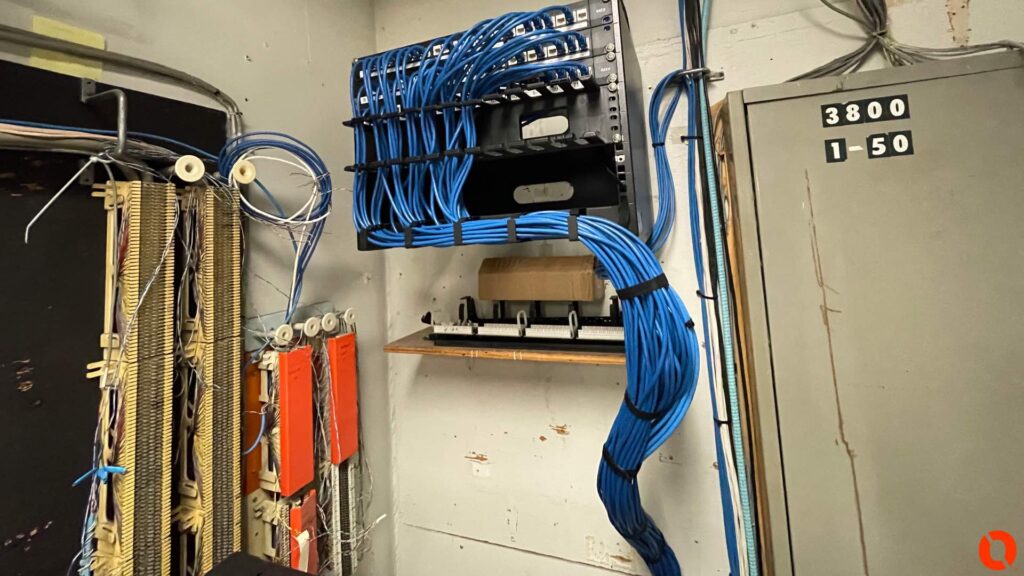
Take a modern VoIP phone sitting on someone’s desk and follow the connection backward. The phone connects to an Ethernet cable, which runs through the building to a patch panel and network switch. That switch provides connectivity and often power to the phone. From there, the call travels through the network, firewall, internet connection, carrier, and cloud platform.
There’s still a lot happening between the handset and the cloud.
That’s why a new VoIP system can perform poorly even when there’s nothing wrong with the phone platform itself. Old or damaged structured cabling, overloaded switches, incorrect network configuration, inadequate PoE, or an unreliable internet connection can all affect call quality.
Moving the PBX to the cloud doesn’t eliminate infrastructure. It makes the condition of that infrastructure even more important.
A Phone-System Replacement Is More Than Replacing Phones
This is also why we’re careful about migrations.
A business phone system usually has years of little decisions buried inside it. There are extensions, hunt groups, voicemail boxes, auto attendants, main numbers, direct numbers, paging interfaces, fax lines, door phones, conference rooms, analog devices, and sometimes equipment nobody remembers until it stops working.
Then there are the employees.
A receptionist who has used the same telephone for ten years doesn’t think about how to transfer a call anymore. It’s muscle memory. The warehouse knows how to make a page. Employees know which buttons to press without looking at them.
A good phone-system migration accounts for all of that.
The goal isn’t to create excitement on Monday morning because everyone has shiny new phones. Ideally, Monday morning is boring. Customers call the same number, the right phones ring, employees know what to do, voicemail goes where it should, and business continues.
If customers barely notice that the entire telephone system changed over the weekend, that’s usually a sign the project was done correctly.
Sometimes the Best Upgrade Is a Repair
Not every telecom service call needs to end with new equipment.
Sometimes the best solution is repairing a cable, replacing a failed component, correcting programming, cleaning up a telecom room, fixing a carrier issue, or finally documenting infrastructure that has been modified by five different companies over the last two decades.
There are also times when an older system simply isn’t worth repairing anymore. Parts may be unavailable, failures may be becoming more frequent, or the company may have outgrown what the platform can provide.
When that happens, we’ll recommend moving forward.
But there’s a difference between replacing technology because it has reached the end of its useful life and replacing it simply because it’s old.
At Kommvia, we work on both sides of that line. We support business phone systems, structured cabling, Wi-Fi, and the network infrastructure connecting everything together. That means sometimes we’re installing something completely new, and other times we’re figuring out why something that’s been working for 20 years suddenly stopped.
We don’t have a problem with old phone systems.
If it’s reliable, supportable, and still doing what your business needs, there may be no reason to rush it out the door.
And if it isn’t, then we’ll help you figure out what comes next.
Because whether your calls are being handled by an old PBX in the equipment room or a modern platform in the cloud, the requirement hasn’t really changed:
When somebody calls your business, the phone needs to ring.
Kommvia Inc.
Business Phone Systems | Structured Cabling | Wi-Fi & Network Infrastructure
Serving businesses throughout Indiana and the Chicago area.
1-844-KOMMVIA
COMMAND THE SIGNAL™
We’re here to help!!