The Phone on Your Desk Is Becoming the Least Important Part of the Phone System
September 18, 2026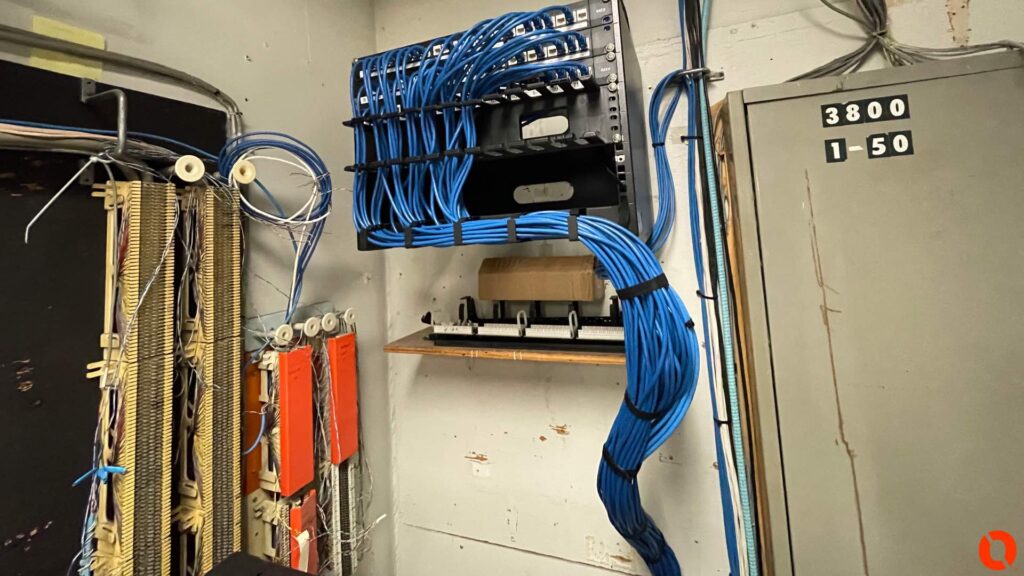
If you’re trying to budget a structured cabling project, one of the first questions is usually pretty simple:
How much is this actually going to cost?
Unfortunately, cabling is one of those trades where giving a price without seeing the building can be almost meaningless.
Twenty network drops in a wide-open single-story office is one job. Twenty drops in an occupied manufacturing facility with 25-foot ceilings, existing conduit, lifts, production equipment, firewalls and a telecom room on the opposite side of the building is an entirely different job.
I’ve worked around enough phone, network and communications systems to know that the cable itself usually isn’t what makes a project expensive. It’s everything required to get that cable from Point A to Point B correctly, safely and cleanly.
So rather than throwing out a fake “$X per drop” number, here’s how we look at structured cabling pricing at Kommvia and what businesses in Indiana and the Chicago area should actually expect when planning a project.
What Actually Determines Structured Cabling Cost?
The biggest factor is labor.
A box of CAT6 is a known cost. Jacks, patch panels, faceplates and cable management are relatively predictable too. What isn’t predictable until we understand the building is how difficult it will be to install everything.
A straightforward office might have accessible ceiling tile, short cable routes and an existing IDF or MDF with plenty of room.
Another building might require a lift, new J-hooks, conduit work, core drilling, difficult pathways, after-hours work or hundreds of feet of cable just to reach one section of the facility.
That’s why two companies asking for 40 network drops can receive dramatically different quotes.
When we look at a structured cabling project, some of the biggest cost factors include the number of cable runs, average cable length, CAT6 versus CAT6A, ceiling height, pathway availability, lift requirements, conduit, firestopping, patch panels, racks, cabinets, cable management, labeling, testing, occupied-workspace restrictions and how much cleanup is required in the existing telecom rooms.
And cleanup can be a bigger issue than people expect.
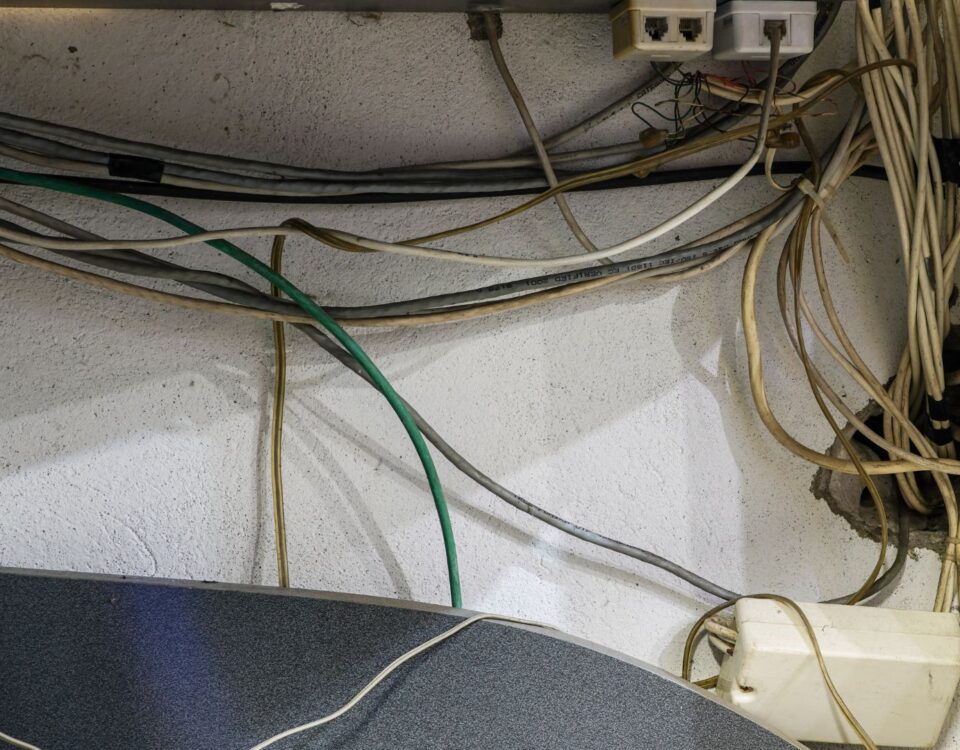
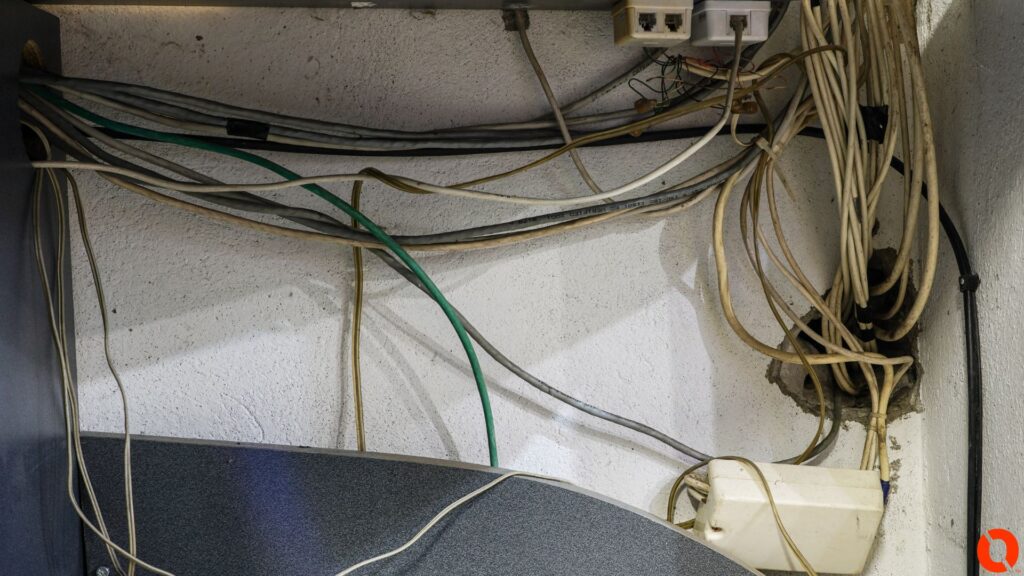
We walk into plenty of facilities where years of moves, additions and changes have left the rack looking like a bowl of spaghetti. At some point, adding another 48 cables without fixing anything else stops making sense.
What Does a Typical Network Drop Cost?
This is where everyone wants a number.
For ordinary commercial work, an installed network drop can often land somewhere in the low hundreds of dollars per location, but that should only be treated as a rough budgeting concept—not a quote.
A short CAT6 run above an accessible drop ceiling is very different from running cable through a warehouse, manufacturing plant, medical facility or older Chicago building.
Volume matters too.
If we’re already mobilized to install 75 cables in one facility, the economics per cable are usually better than sending a technician and equipment out to install two difficult drops.
This is also why internet pricing can be misleading. Searching for “structured cabling pricing” and multiplying a generic per-drop price by 100 doesn’t necessarily tell you what your project will cost.
The building determines the job.
Want a Quick Budget Number?
If you’re still in the planning stage and just need a rough number to work with, we built a Structured Cabling Estimatorthat lets you enter the number of drops, cable type and approximate cable length to get a quick project estimate.
It isn’t a replacement for an actual site visit or quote, but it can give you a useful starting point before you call us.
Try the Kommvia Structured Cabling Estimator:
https://kommvia.com/structured-cabling-estimator/
CAT6 or CAT6A?
For a lot of ordinary office environments, CAT6 remains a very practical choice.
CAT6A starts making more sense when the application, distance, environment or long-term network requirements justify it. It can provide additional performance capability, but the cable is larger, termination can take longer and the overall installation may cost more.
We don’t believe in automatically specifying the most expensive cable available just because it sounds better on a proposal.
The cabling should fit the application.
That means looking at what the network is supporting today, what might be added later and how long the customer expects the infrastructure to remain in service.
A properly designed cabling system should give you room to grow without paying for things the building will never use.
Don’t Forget the Telecom Room
Some of the most important work on a cabling project happens where customers rarely look.
The MDF and IDF rooms.
You can have beautifully installed cable throughout a building and still end up with a mess if everything terminates into poorly labeled patch panels, overloaded racks and years of abandoned cabling.
We pay attention to the entire path.
That includes the cable coming into the room, patch-panel termination, rack layout, labeling, patch cords, switches, cable management and how easy the system will be to troubleshoot five years from now.
A good telecom room should make sense when you open the door.
If a technician has to pull on cables to figure out where they go, something went wrong.
New Installation vs. Cleaning Up an Existing Cabling System
Not every customer needs a completely new system.
Sometimes the smartest option is to keep the good infrastructure and fix the bad parts.
We’ve seen businesses assume they needed to recable an entire office when the real problem was damaged patch cords, bad terminations, poorly placed network equipment, abandoned cable or an IDF room that hadn’t been properly maintained in years.
Other times, the opposite is true.
A building has been patched together for so long that continuing to repair it is just throwing labor at a problem that needs to be rebuilt correctly.
That’s one reason we like seeing the facility before recommending a major project.
There is a big difference between selling cable and solving a cabling problem.
Structured Cabling for Offices
Office cabling is usually the most straightforward environment, but planning still matters.
Workstations are only part of the picture now.
Modern office networks may also need connections for VoIP phones, wireless access points, printers, conference rooms, paging equipment, access control systems, cameras and other network-connected devices.
If you’re renovating an office or moving into a new space, it is almost always cheaper and cleaner to think about those systems before the walls and ceilings are finished.
Running one extra cable during construction is inexpensive.
Coming back six months later and opening finished spaces because nobody planned for a wireless access point is not.
Warehouse and Industrial Structured Cabling
Warehouses and industrial facilities are a different animal.
Distances get longer. Ceilings get higher. Equipment access becomes more complicated. Cable pathways matter more. Environmental conditions can matter. Production schedules matter.
You may also be connecting devices far beyond normal desktop computers—wireless access points, controls equipment, industrial network cabinets, scanners, printers, phones, cameras, access control and remote areas of the facility.
This is where I would be very careful about choosing a cabling contractor strictly on price.
A quote that looks cheap before the project starts can get expensive quickly when nobody accounted for lifts, pathways, long distances or working around production.
Chicago Structured Cabling Projects
Chicago-area projects can introduce their own challenges.
Older commercial buildings, high-rise access requirements, union considerations, building-management requirements, difficult pathways and occupied spaces can all affect how a project needs to be approached.
The same applies to businesses with multiple locations throughout Chicagoland.
Standardization becomes important.
If you’re opening or renovating several offices, retail locations, warehouses or other commercial facilities, you don’t want every site built differently. Rack layouts, labeling, patch panels and documentation should follow a repeatable standard whenever possible.
That makes future service much easier.
Structured Cabling Across Indiana
Indiana projects vary tremendously depending on where we’re working.
A commercial office in Indianapolis, Carmel, Fishers or Westfield may be completely different from a manufacturing or warehouse project in Fort Wayne, Terre Haute, Columbus, Lafayette, Warsaw or Northwest Indiana.
That’s why we don’t try to force every customer into the same cabling package.
Kommvia handles commercial structured cabling and network infrastructure projects throughout Indiana and the greater Chicago market, including new installations, expansions, office moves, troubleshooting, rack cleanup and existing-system upgrades.
Whether the project involves five drops or a much larger buildout, the goal is the same: install something that the next technician can actually understand.
Should You Replace Old CAT5e Cabling?
Not automatically.
If existing CAT5e is installed correctly, tests properly and supports what the business needs, ripping it out simply because CAT6 exists may accomplish very little.
On the other hand, if you’re already renovating the building, increasing network requirements or dealing with questionable old cabling, that may be the right time to upgrade.
We’d rather test and evaluate what is there than tell someone everything old needs to go.
Old doesn’t always mean bad.
Bad means bad.
Testing and Labeling Matter More Than People Think
A cabling job isn’t finished because the laptop connects to the internet.
Every cable should have a purpose. Every endpoint should correspond to something meaningful at the rack. Labels should be readable. Terminations should be clean. Testing should confirm that the installed cabling performs the way it is supposed to.
This matters even more when something fails three years later.
Nobody remembers where “that blue cable above the ceiling” goes.
Good documentation and labeling turn what could be a two-hour troubleshooting problem into a ten-minute problem.
That has real value.
How to Get an Accurate Structured Cabling Price
If you’re budgeting a cabling project, the fastest way to get a useful number is to give the contractor actual information.
How many locations do you need?
What kind of building is it?
How high are the ceilings?
Do you already have racks and patch panels?
Are there existing cable pathways?
Is this new construction, renovation or an occupied building?
Are you adding drops to an existing network or building the infrastructure from scratch?
Do you need wireless access points, phone cabling, cameras, access control, paging or other low-voltage systems at the same time?
Pictures of the telecom room can help too.
For larger projects, walking the facility is usually worth it. We can see in ten minutes what might take twenty emails to explain.
Need Structured Cabling? Talk to Kommvia Before You Start Pulling Cable.
If you’re planning a structured cabling project in Indiana, Northwest Indiana or the Chicago area, give Kommvia a call before you start buying equipment or guessing at drop counts.
We can look at the project as a complete communications system—not just a pile of cable.
Kommvia provides structured cabling, network cabling, data cabling, network infrastructure, business phone systems, VoIP/PBX installation and support, CCTV, access control, troubleshooting, service and repair for commercial customers.
We work with offices, warehouses, manufacturers, healthcare facilities, retail locations, contractors, schools, churches and other commercial facilities.
Maybe you need 10 new CAT6 drops.
Maybe you’re opening a new office and need the entire network built.
Maybe you’re expanding a warehouse.
Maybe the cabling already exists but nobody knows what half of it does.
Maybe your IDF room is an absolute disaster and you’re finally ready to clean it up.
Or maybe you’re getting ready to replace an old phone system and want the cabling and network checked before the new phones arrive.
That’s the kind of work we want to look at.
Get a Structured Cabling Quote from Kommvia
If you have a project coming up in Northwest Indiana, Indianapolis, Fort Wayne, Terre Haute, Warsaw, Lafayette, Carmel, Fishers, Westfield, Columbus, the Chicago metro area or surrounding communities, contact Kommvia and tell us what you’re working on.
Send us the address, approximate number of drops and a few pictures if you have them. For larger projects, we’ll determine whether an onsite walkthrough makes sense.
Don’t wait until the furniture is installed, the employees are moving in Monday morning and somebody realizes there aren’t enough network drops.
Build the infrastructure right the first time.
Contact Kommvia today for structured cabling installation, network cabling, telecom-room cleanup, network infrastructure or business phone system work.
Kommvia Inc. — COMMAND THE SIGNAL™
We’re Here To Help!!