We Don’t Hate Old Phone Systems
August 14, 2026
One Access Point, 87 Devices and a Prayer
August 15, 2026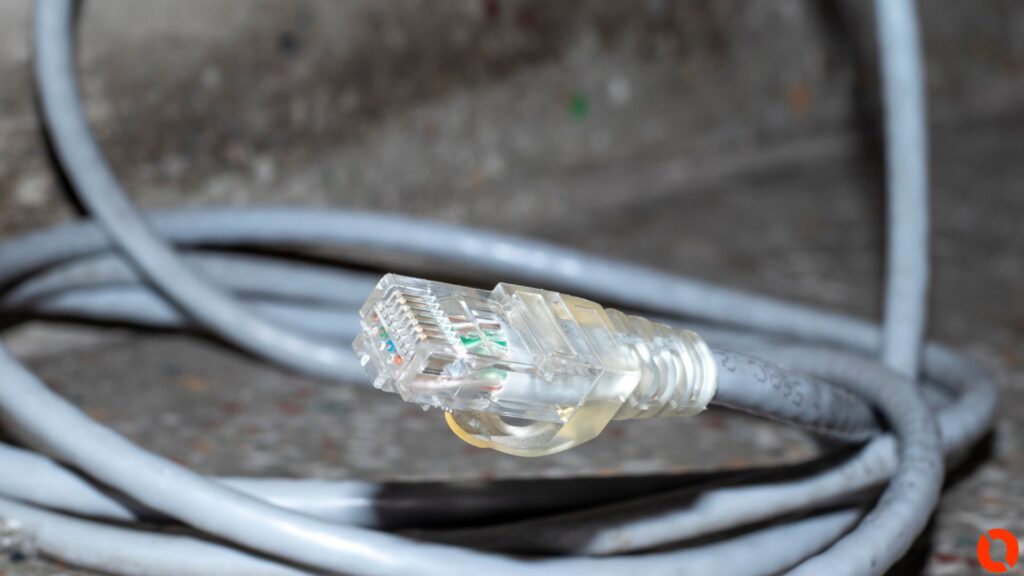
Businesses will spend thousands of dollars on network switches, firewalls, wireless access points, servers, VoIP phones, cameras, and other technology. They’ll compare specifications, evaluate manufacturers, buy support agreements, and carefully plan how everything connects.
Then they’ll plug all of it into a cable nobody has thought about in ten years.
That’s one of the strange realities of network infrastructure. Some of the least expensive components in the system can cause some of the most frustrating problems.
At Kommvia, we’ve learned not to overlook the simple stuff. When a network starts acting strangely, the problem isn’t always the expensive piece of equipment with blinking lights. Sometimes it’s the cable plugged into the back of it.
Expensive Equipment Still Depends on Copper
Look inside a modern telecom room and there’s usually a lot of impressive hardware.
Managed switches. Firewalls. Routers. Fiber uplinks. Battery backups. Network controllers. Maybe thousands of dollars worth of equipment packed into a single rack.
But eventually, much of that equipment connects to ordinary Ethernet cabling running through walls and ceilings.
That cable may feed a workstation, VoIP phone, printer, camera, wireless access point, building control system, or another network device. If the physical connection isn’t reliable, everything above it can become unreliable too.
This is why we look at structured cabling as infrastructure rather than an accessory.
You wouldn’t install an expensive piece of industrial equipment and give no thought to the electrical conductors feeding it. Network infrastructure deserves the same consideration.
Bad Cables Don’t Always Fail Completely
A completely dead cable is usually easy to understand.
The device doesn’t connect. Someone investigates. The problem gets repaired.
Intermittent problems are different.
A cable can be damaged without being completely disconnected. A termination can be marginal. A patch cable can have an internal problem. A jack can be poorly terminated. A cable can be crushed, kinked, stretched, or damaged somewhere above a ceiling where nobody can see it.
The connection may still work.
Most of the time.
Those three words are where troubleshooting gets expensive.
Employees report that the network is “randomly slow.” A phone occasionally has bad audio. A camera drops offline and comes back. An access point behaves strangely. A workstation loses connectivity twice a week.
Nobody can reproduce the problem when the technician arrives.
So attention naturally moves toward the equipment.
The switch gets rebooted. Firmware gets updated. The device gets replaced. Network settings get changed.
And the damaged cable quietly remains exactly where it was.
The Network Doesn’t Know Someone Drove a Staple Through the Cable
Ethernet cabling lives a harder life than most people realize.
It gets pulled through ceilings filled with electrical conduit, HVAC equipment, sprinkler piping, lighting, steel framing, and decades of other building infrastructure. It gets moved during renovations. Ceiling contractors work around it. New equipment gets installed next to it. Furniture gets relocated. Patch cords get stepped on, pinched behind desks, or bent sharply inside cabinets.
Sometimes cables are installed correctly and stay untouched for twenty years.
Sometimes they aren’t so lucky.
The network switch has no idea what happened above the ceiling. It only knows that it’s trying to communicate with whatever is connected at the other end.
That physical layer is easy to forget because most of it is invisible once the building is finished.
Until something stops working.
PoE Changed What the Cable Is Responsible For
Ethernet cabling isn’t always carrying data anymore.
Increasingly, it’s carrying power too.
Wireless access points, VoIP phones, security cameras, access control devices, and other equipment commonly use Power over Ethernet. One cable may now be responsible for both communication and electrical power to the device.
That makes the quality of the cabling infrastructure even more important.
A marginal connection isn’t simply connecting a computer to a network. It may be powering an access point serving dozens of wireless devices or a phone employees depend on to communicate with customers.
As PoE requirements increase and more building systems move onto IP networks, structured cabling becomes part of a much larger technology ecosystem.
The cable may be inexpensive.
What depends on it isn’t.
The Patch Cable Deserves Some Suspicion Too
Not every cabling problem is hidden inside a wall.
Sometimes it’s three feet long and sitting right in front of you.
Patch cables get treated as disposable, and in many ways they are. They’re inexpensive and easy to replace. But they also get moved, bent, pulled, pinched, tangled, and reused constantly.
When troubleshooting a network problem, it’s easy to jump directly to configuration or hardware because those problems feel more technical.
There’s nothing particularly exciting about replacing a patch cord.
But good troubleshooting isn’t about finding the most complicated explanation.
It’s about finding the correct one.
Experienced technicians learn to be suspicious of simple things.
A Clean Telecom Room Isn’t Just About Appearance
There’s another reason Kommvia puts so much emphasis on clean cabling and organized telecom rooms.
Organization makes troubleshooting easier.
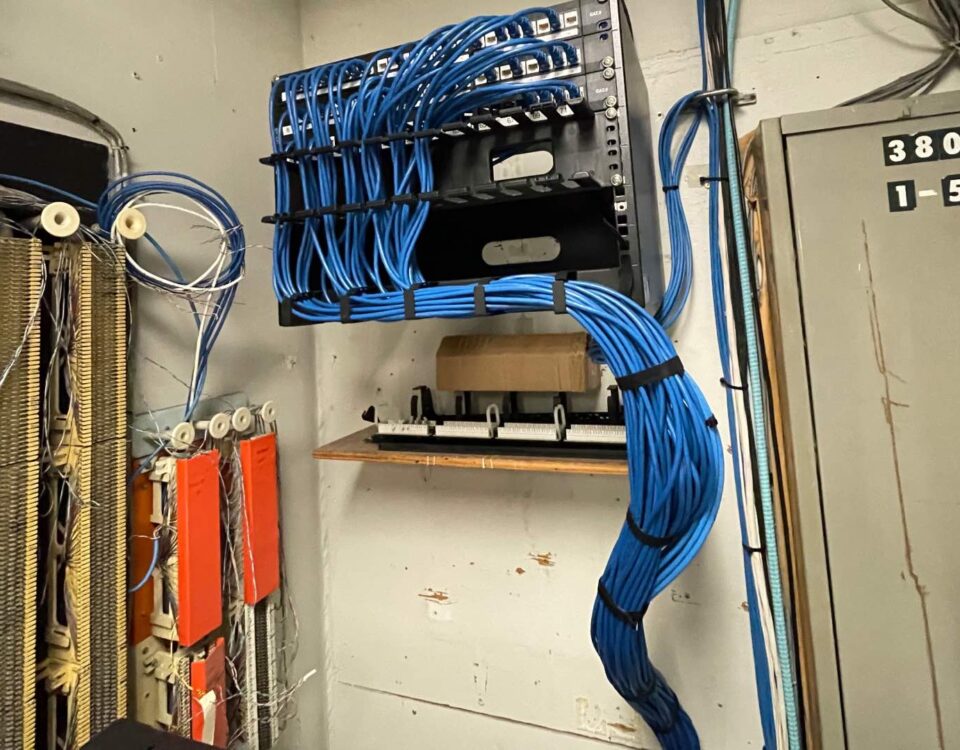
When patch panels are labeled, cables are managed properly, equipment is documented, and someone can quickly determine where a connection goes, problems become easier to isolate.
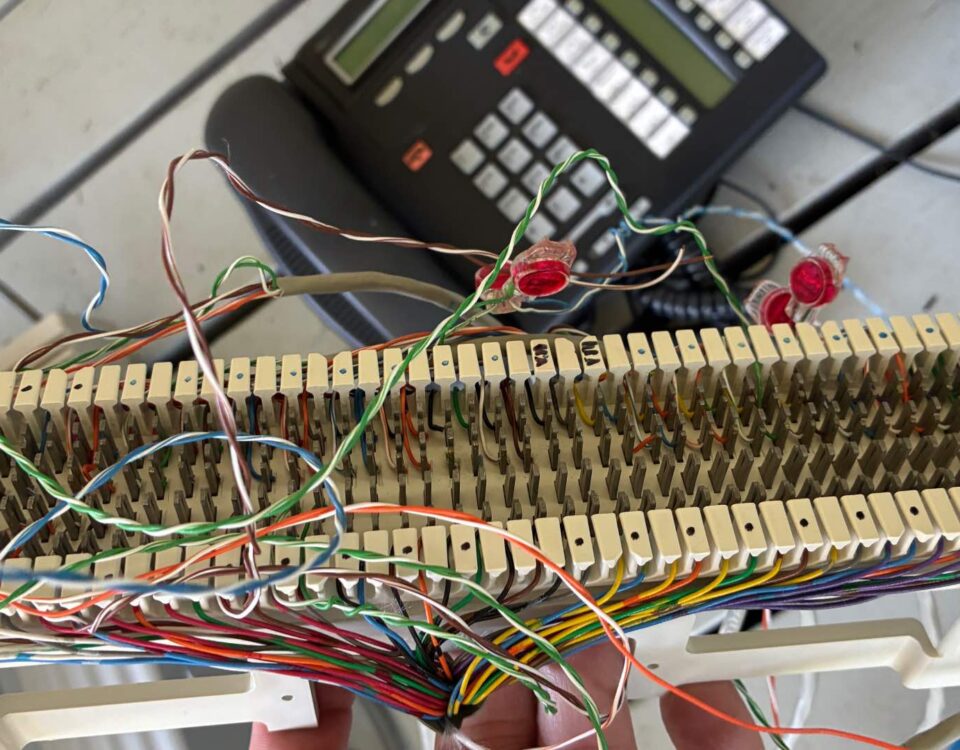
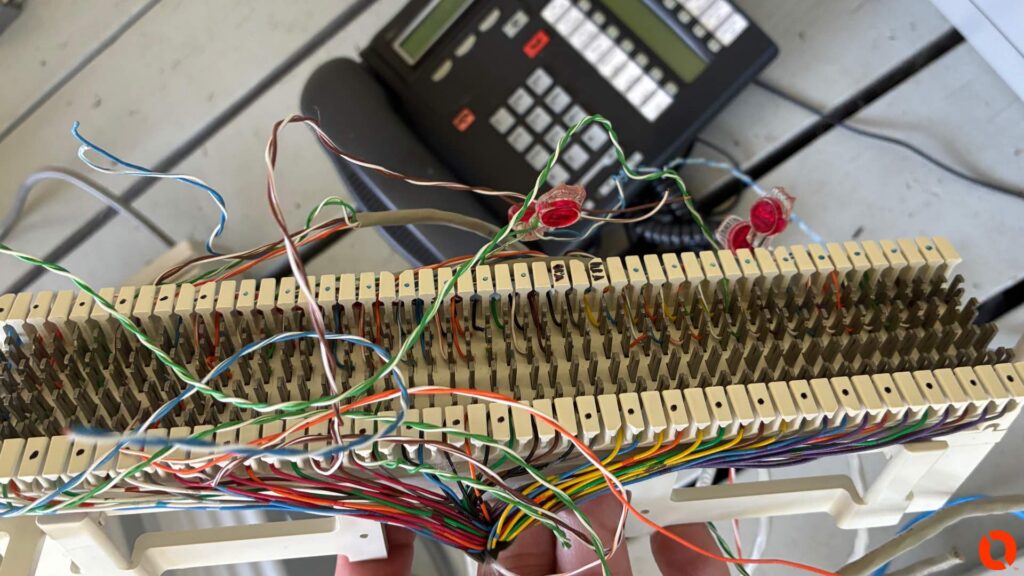
Compare that with opening a telecom closet and finding hundreds of unlabeled patch cords running in every direction.
Which cable feeds the conference room access point?
Nobody knows.
Which switch port feeds the shipping office?
Start unplugging things and we’ll find out.
That’s not just ugly cabling. It’s operational debt.
Every undocumented connection makes the next service call harder than it needs to be.
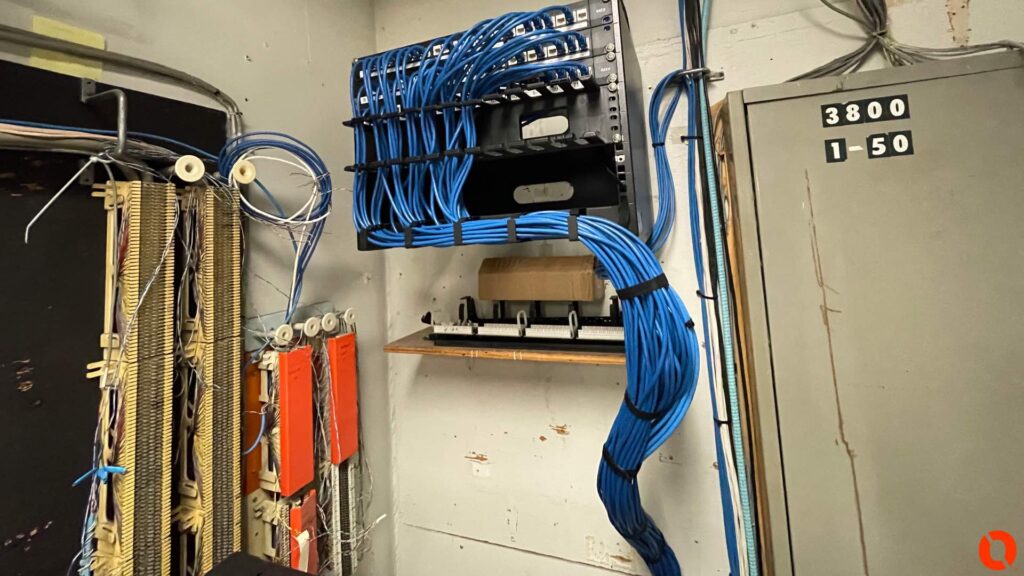
A clean installation isn’t about making the rack look good for a photograph. It’s about leaving infrastructure that the next technician can actually understand.
Don’t Replace the Network Until You’ve Checked the Network
When businesses experience connectivity problems, there’s a natural tendency to look toward major equipment first.
Maybe we need new switches.
Maybe we need better Wi-Fi.
Maybe the firewall is too old.
Maybe the phones need replacing.
Sometimes those conclusions are correct.
But before spending thousands of dollars replacing equipment, it makes sense to verify the infrastructure connecting it.
Check the cable.
Check the termination.
Check the patch panel.
Check the jack.
Check the patch cord.
Test the run.
Look at the physical path.
Then start moving farther up the network.
That approach isn’t glamorous, but neither is spending $10,000 replacing equipment only to discover that the original problem is still there.
Structured Cabling Is the Part You’re Supposed to Forget About
A good structured cabling installation doesn’t get much attention after the job is finished.
That’s actually the point.
It gets installed correctly, terminated properly, labeled, tested, documented, and then disappears into the building.
Employees don’t think about it.
Management doesn’t talk about it.
The IT department doesn’t spend every Tuesday trying to figure out why port 37 keeps dropping.
It just works.
At Kommvia, that’s how we think structured cabling should be treated. It’s the physical foundation underneath business phone systems, Wi-Fi access points, network equipment, cameras, computers, and increasingly many of the other technologies operating inside a commercial facility.
The expensive equipment gets most of the attention because that’s what everyone can see.
We’re also interested in what’s behind the wall.
Because sometimes the difference between a reliable network and three days of troubleshooting is nothing more complicated than a piece of cable.
The cheapest component in your network can still become the most expensive one to ignore.
Kommvia Inc.
Business Phone Systems | Structured Cabling | Wi-Fi & Network Infrastructure
Serving businesses throughout Indiana and the Chicago area.
1-844-KOMMVIA
COMMAND THE SIGNAL™
We’re here to help!!