Don’t Rip Out That PBX Until You Know What It’s Doing
August 17, 2026
Should You Replace Your Business Phone System or Keep It?
August 24, 2026
If you’re planning a new office, remodeling an existing facility, adding workstations, upgrading your network, or replacing old cabling, one of the first questions you’re probably going to ask is simple:
How much is this going to cost?
Unfortunately, structured cabling is one of those projects where a simple price-per-drop number can be misleading.
Two businesses with the same number of employees can have dramatically different cabling costs. A 30-drop office in a new construction space with open ceilings and good pathways is a very different project from a 30-drop installation in an occupied building with finished ceilings, limited access, long cable runs, and no usable pathway.
That is why a good structured cabling proposal should be based on the building, the installation requirements, and the intended use of the network, not just the number of cables.
Commercial structured cabling is also more than pulling cable from Point A to Point B. A properly designed system considers the telecommunications rooms, pathways, terminations, labeling, testing, administration, and how the infrastructure will support the business over time. These are all areas addressed by the TIA’s commercial telecommunications cabling standards.
What Is a “Drop”?
Before talking about cost, it helps to understand what contractors mean when they say “drop.”
A network drop is generally one complete horizontal cable run from a telecommunications room or network rack to an outlet or device location.
That might be:
- A workstation
- A VoIP telephone
- A wireless access point
- A printer
- A point-of-sale terminal
- A conference room
- A network appliance
- Another business technology device
But a drop isn’t simply a box of cable and a technician pulling it through the ceiling.
A finished installation can include the cable, jacks, patch panel termination, faceplate, labeling, installation labor, testing, documentation and the supporting infrastructure required to get the cable where it needs to go.
That’s why comparing two proposals based only on the number of drops can be misleading.
What Does Structured Cabling Cost?
As a general 2026 budgeting reference, published commercial-market estimates commonly put installed copper cabling in the neighborhood of $150 to $350 or more per drop, depending heavily on the building and project requirements. Some projects will fall below that range, while difficult installations can go considerably higher.
Those numbers should be treated as budgeting guidance, not a quote.
The building ultimately determines the price.
For example, a straightforward installation with accessible ceilings, short cable paths and an existing telecommunications room is relatively predictable.
A project requiring conduit, difficult pathway work, extensive ceiling access, firestopping, multiple telecommunications rooms, after-hours installation or significant rack work can have a very different cost structure.
The number of drops is important.
It just isn’t the whole story.
The Six Biggest Factors That Affect Cabling Cost
1. The Number of Drops
This is the obvious one.
A 10-drop installation requires considerably less material and labor than a 100-drop installation.
But larger projects can also have efficiencies. Once a crew is already mobilized, the incremental cost of additional drops may be lower than it would be on a very small project.
The important question isn’t simply:
“How many employees do we have?”
It’s:
“How many network connections will the business actually need?”
That includes more than desks.
Wireless access points, conference rooms, printers, phones, specialized equipment and future expansion should all be considered.
Planning for the network you will need three years from now is usually better than installing exactly what you need today and immediately running out of capacity.
2. Cat6 vs. Cat6A
The cable specification matters, but it shouldn’t be the only thing driving the decision.
Cat6 is still an extremely common choice for commercial network installations.
Cat6A can make sense where higher performance, longer-term requirements, Power over Ethernet considerations, or the physical environment justify it.
The right question isn’t:
“Which cable is better?”
It’s:
“Which cable makes sense for this building and what we’re trying to accomplish?”
Over-specifying a system can waste money.
Under-specifying it can be much more expensive when you have to replace it later.
A good cabling design should balance today’s requirements with the expected life of the infrastructure.
3. The Building Itself
This is where estimates can change quickly.
A cable run through an accessible open ceiling is one thing.
Running that same cable through a finished office, above a difficult ceiling, through multiple walls, around existing mechanical systems or through areas that require special access is something else entirely.
Building conditions that can affect cost include:
- Open vs. finished ceilings
- Cable tray availability
- Existing conduit
- Distance from the telecommunications room
- Multiple floors
- Concrete construction
- Restricted access
- Occupied spaces
- High ceilings
- Difficult pathways
- Fire-rated assemblies
- Existing congestion
This is one reason an experienced installer wants to see the building before providing a final number.
4. Pathways and Infrastructure
The cable itself is only part of the infrastructure.
Sometimes the building already has usable pathways.
Sometimes it doesn’t.
If new cable tray, conduit, sleeves, supports or other pathway infrastructure is required, that can significantly affect the project.
TIA’s commercial cabling framework specifically addresses pathways and spaces along with telecommunications rooms, horizontal cabling, installation, testing and related infrastructure.
This is an important distinction when comparing proposals.
If one contractor’s proposal assumes an existing pathway and another contractor includes new pathway construction, their prices may look very different even though both are bidding the same number of drops.
5. The Telecommunications Room and Rack
The other end of every cable has to go somewhere.
A professional installation may include:
- Patch panels
- Rack hardware
- Cable management
- Patch cords
- Labeling
- Termination hardware
- Grounding and bonding considerations
- Network equipment coordination
- Rack organization
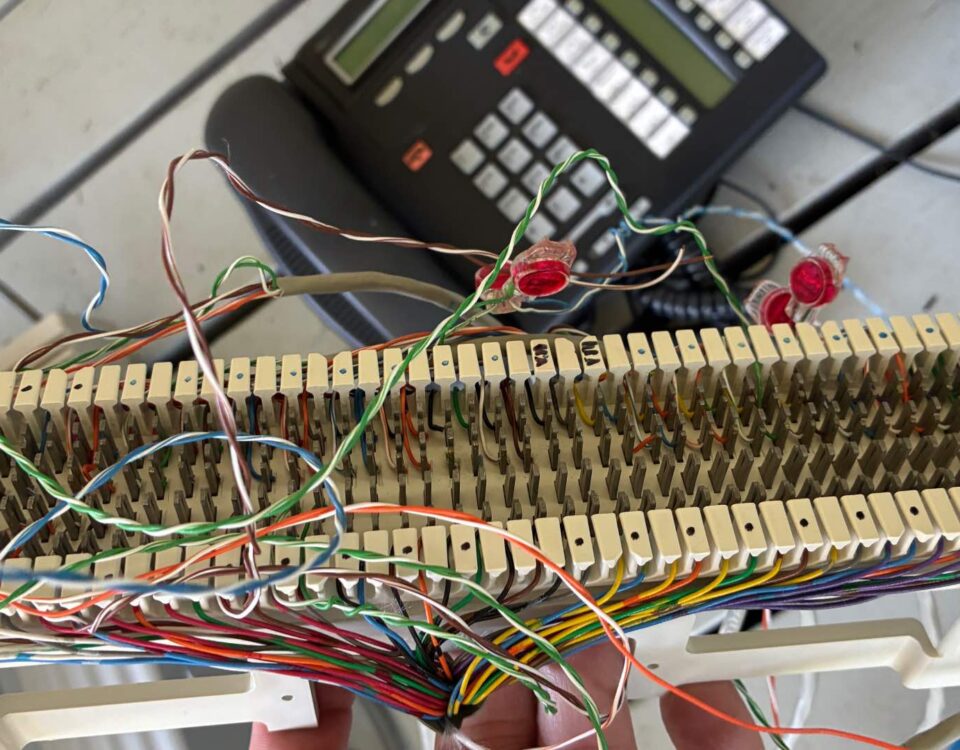
A business can have beautiful new cabling running throughout the building and still end up with a terrible network closet.
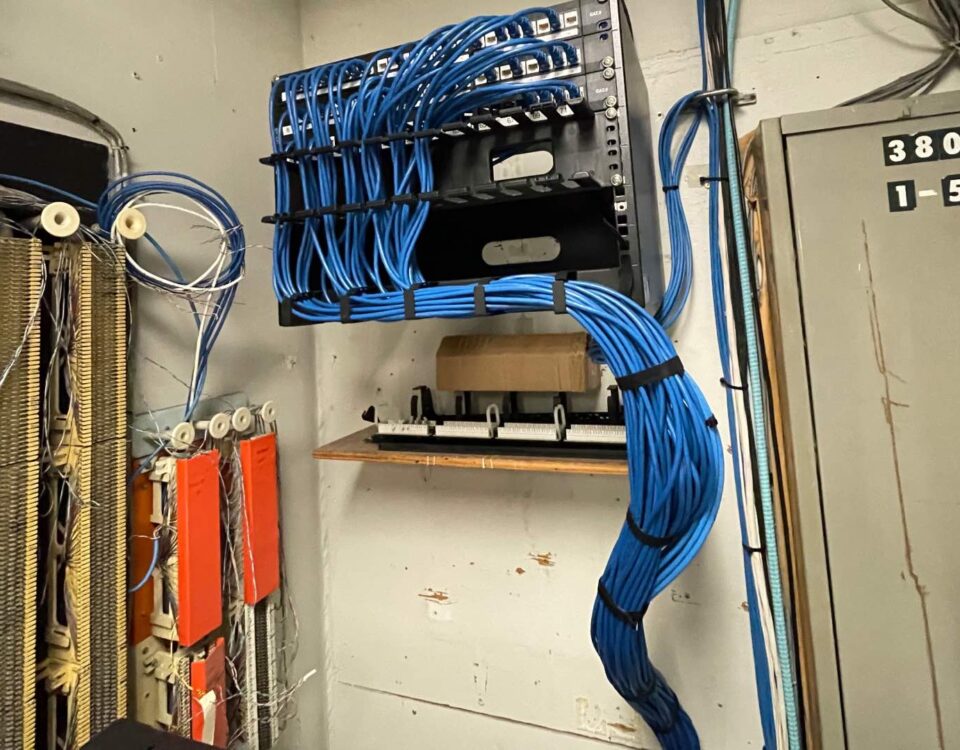
We’ve seen the other side of this too: a clean, organized telecommunications room makes troubleshooting, expansion and future service dramatically easier.
The rack is not an afterthought.
It’s part of the infrastructure.
6. Testing and Documentation
This is one of the areas where cheap cabling proposals can become expensive later.
A cable can be installed, terminated and appear to work while still having performance problems.
Professional structured cabling involves more than checking whether a device gets a network connection. Industry standards address installation performance and field testing requirements, and TIA’s cabling committee specifically covers installation and field testing of telecommunications cabling systems.
Testing provides confidence that the installed cabling actually meets the required performance criteria.
Documentation matters too.
A properly labeled and documented system gives the next technician a map instead of a mystery.
Why You Should Be Careful With Extremely Cheap Per-Drop Pricing
When comparing proposals, a very low per-drop price can look attractive.
But ask what is actually included.
Does the price include:
- Cable?
- Terminations?
- Jacks?
- Faceplates?
- Patch panels?
- Labels?
- Testing?
- Certification?
- Cable management?
- Rack work?
- Firestopping?
- Pathway work?
- Cleanup?
- Documentation?
A $100 drop and a $250 drop may not be the same product.
The cheapest proposal isn’t necessarily the cheapest installation.
The better question is:
What am I actually getting for the price?
Why a Site Walk Matters
This is why we don’t believe in pretending that a commercial cabling project can always be accurately priced from a phone call.
Plans, square footage and a drop count are useful.
They’re not the whole picture.
Walking the building allows the installer to see the actual pathways, telecommunications rooms, ceiling conditions, cable routes, existing infrastructure and obstacles that aren’t obvious from a floor plan.
It also creates an opportunity to ask a more important question:
What is the business actually trying to accomplish with this network?
A company adding 20 desks may need more than 20 cables.
A company installing Wi-Fi may need dedicated infrastructure for access points.
A company upgrading its phone system may need to consider how the existing cabling and network will support VoIP.
A company remodeling a facility may have an opportunity to install infrastructure now that would be extremely expensive to add later.
Good cabling starts with understanding the building and the business.
Don’t Just Count Drops. Think About the Next Ten Years.
One of the biggest mistakes we see in infrastructure projects is designing around today’s headcount.
Buildings last a long time.
Businesses change.
Employees move. Offices get reconfigured. Wi-Fi expands. Phone systems change. Network equipment gets upgraded. New technology gets added.
The cabling installed behind the walls may outlive several generations of the equipment connected to it.
That makes structured cabling an infrastructure decision, not simply an installation expense.
Spending a little more to properly design pathways, labeling, telecommunications rooms and expansion capacity can be much cheaper than opening finished ceilings and walls later.
So What Should You Budget?
If you are trying to establish an initial budget, using a broad per-drop figure can be useful.
For straightforward commercial copper installations, $150 to $350+ per drop is a reasonable 2026 planning range based on published industry estimates. But that number should move up or down based on the actual building conditions, cable specification, pathway requirements, project size and scope.
For anything beyond a very simple installation, don’t treat a per-drop number as a final project price.
The best estimate comes from understanding the actual site.
The Bottom Line
Structured cabling isn’t expensive because the cable is expensive.
You’re paying for the entire infrastructure around that cable.
You’re paying for the design, labor, access, pathways, terminations, testing, organization and the experience required to install it correctly.
And that’s why two buildings with the same number of network drops can have completely different project costs.
If you’re planning a new installation, office renovation, network upgrade or business phone system project, start with the infrastructure rather than picking a cable price out of thin air.
Know what you’re connecting. Know where it needs to go. Understand the building. Then build the cabling system around the business.
That’s how you get a network that works today without creating another infrastructure problem five years from now.
Planning a Commercial Cabling Project?
Kommvia works with businesses on structured cabling, network infrastructure and telecommunications projects throughout Northwest Indiana and the Chicago area.
If you’re trying to determine how many drops you need, what type of cabling makes sense, or what your project should realistically cost, start with the building and the requirements.
Don’t guess at the number. Build the scope first.
We’re Here To Help!!