One Access Point, 87 Devices and a Prayer
August 15, 2026
The Power Is Back On. Why Aren’t the Phones and Wi-Fi Workin’
August 15, 2026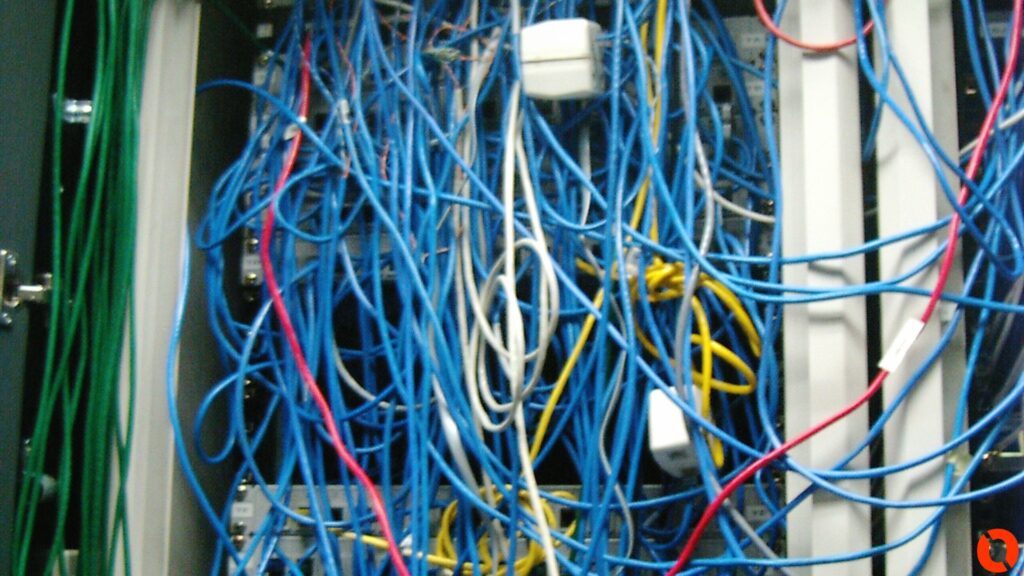
Every commercial building seems to have one room that nobody wants to take responsibility for.
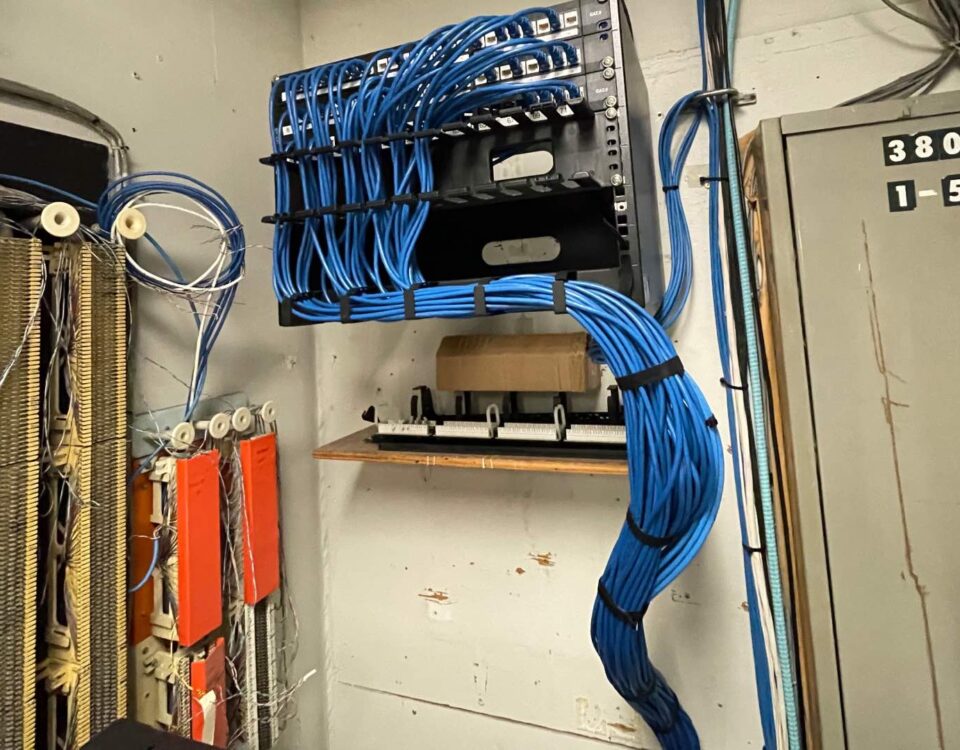
Sometimes it’s an actual telecom room. Sometimes it’s a closet shared with electrical panels, cleaning supplies, old computer equipment, and three boxes nobody has opened since 2009. In smaller businesses, it might be a piece of plywood mounted to the wall in a back room. Whatever form it takes, this is usually where years of network and telephone infrastructure eventually come together.
Open the door and you can learn a surprising amount about the history of the building.
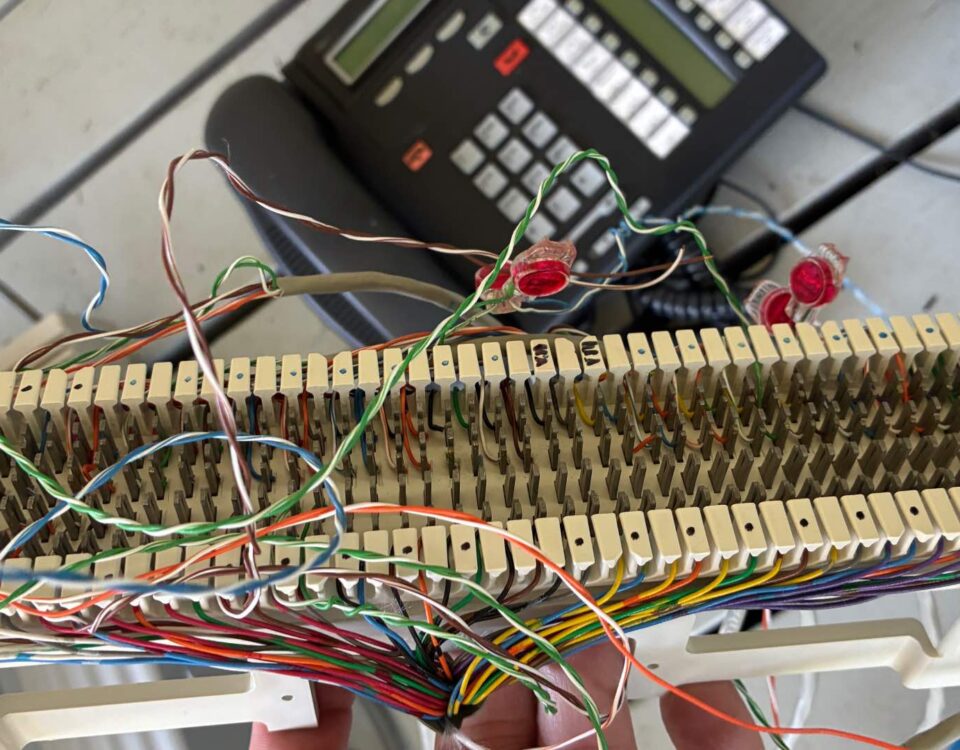
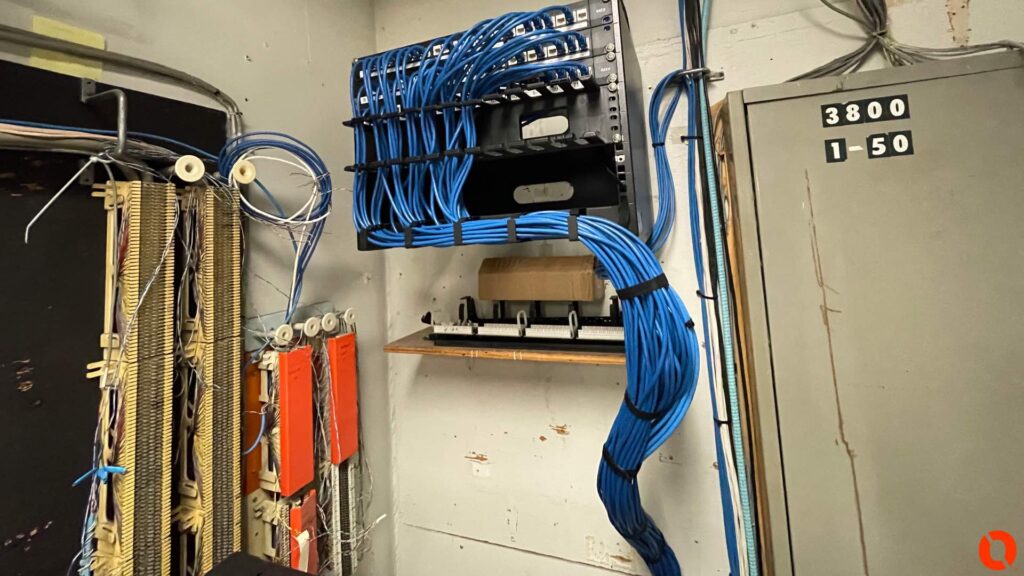
There might be a modern network switch mounted above a 25-year-old punch block. A brand-new firewall could be sitting next to an old telephone system that hasn’t been powered on in a decade. Patch cords disappear into bundles of cable with no labels. A cable enters through one wall and nobody knows where it goes. There’s an old modem sitting on a shelf, still plugged in, and everyone is afraid to unplug it because somebody says, “I think accounting needs that.”
We see rooms like this all the time.
They’re rarely the result of one bad installation. More often, they’re the result of twenty years of perfectly reasonable decisions made by different people at different times.
Buildings Collect Technology
A business moves into a building and installs a phone system. A few years later, computers are added. Then the company upgrades its network. Someone installs Wi-Fi. Another contractor installs cameras. The internet provider replaces its equipment. The phone carrier changes. A new IT company takes over. The business remodels an office. Another switch gets added because the first one runs out of ports.
Each project solves the problem that existed at the time.
The trouble is that almost nobody comes back afterward and looks at the entire room as one system.
Old equipment stays mounted because nobody is completely sure whether it’s still being used. Abandoned cable remains in place. New patch cords get routed around old ones. Labels fall off or were never installed. Documentation disappears when employees leave or vendors change.
Eventually the telecom room becomes a physical record of every technology decision the building has made.
That’s actually one of the things we find interesting about these rooms. To someone unfamiliar with telecommunications, it can look like a pile of wires. To an experienced technician, there are clues everywhere.
The Mystery Cable Problem
One of the biggest problems isn’t necessarily old equipment. It’s not knowing what anything does.
A properly labeled patch panel can tell you exactly which cable serves an office, access point, VoIP phone, camera, or other network device. When the infrastructure is documented, a technician can trace a problem logically and make changes with confidence.
Without that information, even simple work becomes harder.
Imagine an access point in the warehouse stops working. The AP itself appears fine, so the next step is checking its network connection. Somewhere in the telecom room is the other end of that cable.
Which one?
Now the troubleshooting process includes figuring out infrastructure that should already be known.
This becomes even more important when a business is operating 24 hours a day or has equipment that can’t casually be disconnected. Pulling the wrong patch cord isn’t just an inconvenience if that connection happens to feed a production computer, phone system, camera, access point, or another critical device.
The mess itself isn’t always the biggest problem. The uncertainty is.
Don’t Unplug the Box Nobody Recognizes
Old telecom rooms are full of equipment that appears obsolete.
Sometimes it is.
Sometimes it isn’t.
That beige box on the wall might be completely abandoned, or it might still be providing an analog line to a device nobody remembered to mention. The old punch block might look ancient, but it could still be distributing voice circuits throughout the building. A small network switch tucked behind a cabinet might be feeding an office on the other side of the facility.
This is why we’re careful about “cleaning up” telecom infrastructure by simply removing anything that looks old.
Before something gets disconnected, it’s worth understanding what it does.
Telecommunications is full of strange combinations of old and new technology. A modern cloud phone system may still interface with an older paging amplifier. A new network can coexist with cabling installed decades earlier. A business may have moved almost everything to VoIP while keeping a handful of analog devices for specific purposes.
The age of the equipment doesn’t tell you whether it’s important.
A Clean Rack Is More Than a Good Photograph
There’s a reason network installers like showing pictures of clean telecom racks. They look good.
But appearance isn’t the most important benefit.
Organization makes infrastructure easier to maintain.
When patch cables are appropriately sized and routed, labels are readable, switches and patch panels are arranged logically, and unused connections are identified, the next person working on the system can understand what they’re looking at.
That matters during an outage.
It also matters when the company grows. Adding another access point, moving an employee, installing VoIP phones, expanding the network, or troubleshooting a connection becomes easier when the infrastructure underneath everything is organized.
A clean telecom room saves time later.
The opposite is also true. Every shortcut eventually becomes somebody else’s troubleshooting problem.
The Telecom Room Usually Gets Ignored Until Something Breaks
Most employees never see this room.
They see the things connected to it.
They see the phone on their desk. They connect their laptop to Wi-Fi. They use a printer. They open a cloud application. They walk underneath an access point without thinking about it.
All of those devices eventually depend on infrastructure somewhere else in the building.
That’s why telecom rooms tend to receive attention at the worst possible time. Nobody thinks about them while everything is working. Then the network goes down, phones stop working, an access point disappears, or an office loses connectivity, and suddenly several people are standing in front of the rack trying to figure out what everything does.
That’s not the ideal time to discover that nothing is labeled.
Sometimes Cleanup Should Be Its Own Project
Not every messy telecom room needs to be completely rebuilt. There are plenty of ugly installations that function reliably, and tearing everything apart simply for appearance can create unnecessary risk.
But there comes a point where accumulated changes begin making the infrastructure difficult to service.
That’s when cleanup can make sense as its own project.
The first step isn’t ripping cables out. It’s identifying what exists. Which equipment is active? Which cabling is being used? What can safely be removed? Which connections should be labeled? Are patch panels still serviceable? Are switches mounted properly? Is there room for future expansion?
Once those questions are answered, the room can be reorganized without turning the project into an archaeological demolition.
The goal isn’t perfection. It’s creating infrastructure that someone can understand five years from now.
Your Telecom Room Is Part of the Building
Businesses tend to think of network equipment as IT equipment, but the cabling and physical infrastructure supporting it are really part of the facility.
Structured cabling can remain in a building through multiple generations of computers, phone systems, switches, and wireless access points. A well-installed cable might outlive several pieces of equipment connected to either end of it.
That’s why we believe the physical side deserves more attention than it often receives.
At Kommvia, we work with business phone systems, structured cabling, Wi-Fi access points, and network infrastructure. Those systems often intersect in the same place: the room nobody thinks about until something isn’t working.
If your telecom closet contains twenty years of cables, old equipment, mystery power supplies, unlabeled patch panels, and one box everyone is terrified to unplug, you’re definitely not alone.
Just don’t start pulling cables to see what happens.
That’s one troubleshooting method we don’t recommend.
Kommvia Inc.
Kommvia provides business phone systems, structured cabling, Wi-Fi access points, and network infrastructure for commercial and industrial facilities throughout Indiana and the Chicago area.
1-844-KOMMVIA | COMMAND THE SIGNAL™
We’re Here To Help!!